Cybersecurity Monthly Report (June 2026)
Cybersecurity Monthly Report (June 2026)
1. Cybersecurity: Long Story Short
Response Strategies and Recommendations for CISOs in Light of the Surge in AI-Driven Frontier Vulnerabilities
1.1 CVEs are projected to surge to 66,000
On June 15, 2026, during its 38th Annual Conference, the Forum of Incident Response and Security Teams (FIRST) released its mid-year vulnerability forecast report, revising the total number of Common Vulnerabilities and Exposures (CVEs) projected for 2026 upward from 59,427 to approximately 66,000 [Note 1].
According to FIRST's analysis, key factors driving this surge include AI-assisted vulnerability discovery and a 3,119% year-over-year increase in CVEs issued by CNAs-of-Last-Resort (such as VulnCheck) [Note 2].
1.2 Surge in Disclosures, but Exploitability Rate Remains Flat
The FIRST report highlights that while the total volume of vulnerabilities is rising, the proportion of those actively exploited or possessing high exploitation potential has not increased accordingly. Using the Cybersecurity and Infrastructure Security Agency's (CISA) Known Exploited Vulnerabilities (KEV) catalog and an Exploit Prediction Scoring System (EPSS) score threshold above 10% to filter the data, only about 7% of the CVEs disclosed in 2026 carry actual exploitability. As of May 1, the KEV catalog had accumulated 1,587 entries.
1.3 Patching Capacity Becomes the New Bottleneck
Anthropic’s progress report on Project Glasswing, released on May 22, exposed a stark reality: out of 530 publicly disclosed critical vulnerabilities, only 75 had been patched, with 65 security advisories published—averaging roughly two weeks of development time per critical patch [Note 3]. The velocity of vulnerability discovery has far surpassed the speed of patching; the bottleneck has officially shifted from "finding" to "fixing".
As noted in the April 2026 issue of the Cybersecurity Monthly Report (hereinafter "the Journal"), the median time from disclosure to weaponization has shrunk to just a few hours. Juxtaposed with this month's data, organizations face dual pressures: expanding remediation backlogs and shrinking response windows. The traditional model of passively waiting for vendor patches before taking action will become unsustainable in the second half of 2026.
1.4 Actionable Strategies for CISOs
Synthesizing FIRST's recommendations for global security teams and extending the three-pillar framework ("Strategy," "Management," and "Technology") introduced in the Journal's April issue, CISOs across organizations are advised to take the following actions:
(1) Establish Risk-Driven Patching Mechanisms
Utilize metrics such as the KEV catalog for risk categorization. Prioritize patching based on actual exploitability, focusing first on high-risk vulnerabilities and internet-facing system weaknesses.
(2) Proactively Build Patching Capacity
With patching workloads expected to double in H2 2026, organizations must increase the automation of testing and deployment. Furthermore, explicit Service Level Agreements (SLAs) regarding vendor patching timelines should be stipulated in outsourced contracts.
(3) Deploy Defensive AI Tools
Adversaries are already leveraging AI at scale. If defenders continue to handle vulnerabilities manually, the time gap between attack and defense will widen. Organizations should evaluate AI-assisted vulnerability scanning, threat intelligence analysis, and patch verification, adopting Mean Time to Remediate (MTTR) as the primary performance metric.
During the 1st Meeting of National Information and Communication Security Taskforce (NICST) held in July this year, Vice Premier Cheng of the Executive Yuan explicitly instructed that, in response to the threats posed by frontier AI models quickly detecting vulnerabilities and launching attacks, AI technology must be deployed simultaneously to deepen defensive capabilities. In addition, the Ministry of Digital Affairs will subsequently issue vulnerability management guidelines, requiring all organizations to rapidly comply with the patch protocols or implement corresponding defensive countermeasures. Faced with the forecast trend of total vulnerabilities reaching up to 66,000 this year, organizations need not panic. However, they must recalibrate their defensive mindset: precisely focus limited human resources on key exploited vulnerabilities, with "accelerated mitigation and recovery" as their primary core objective.
2. Recent Policy Highlights
2.1 The 2nd Product Cybersecurity Bug Bounty Event: Registration for software vendors (Blue Teams) opened on July 1 on the official website of the Taiwan Computer Emergency Response Team/Coordination Center (TWCERT/CC). Registration for Red Teams (top domestic white-hat hackers) will open on September 1. The event is scheduled to launch officially on October 1 and will run for two months.
2.2 To assist government organizations in strengthening ICT equipment management for personnel traveling overseas on official business—preventing theft, tampering, damage, loss, or leakage of confidential government data—the Administration for Cyber Security (ACS) drafted the “Guidelines for the Management of ICT Equipment for Official Overseas Travel (including Mainland China, Hong Kong, and Macao)”, which was promulgated and enacted on July 1.
2.3 In consideration of rapidly evolving information technology and complex equipment types, the specific scope and boundaries of "broadcasting equipment and internet access services provided by organizations (either self-operated or outsourced) in public places for public viewing or use, when necessary to maintain cybersecurity" under Paragraph 1 of Article 11 and Paragraph 1 of Article 27 of the Cyber Security Management Act required further clarification. The ACS issued an official legal interpretation ruling on June 29, explicitly defining terms and scopes including "broadcasting equipment", "internet access services", and "when necessary to maintain cybersecurity" to facilitate accurate identification and execution by all organizations.
3. Recent Cybersecurity Incident Sharing
Risk of Prompt Injection in AI Customer Service Chatbots and Remediation Measures
Recently, an AI customer service chatbot provided on a government agency website was verified to be vulnerable to Prompt Injection. Attackers could instruct it to execute tasks beyond its intended design—such as attempting to read files like /etc/passwd and /etc/shadow—raising concerns over sensitive data exposure. Subsequently, the agency restricted the application's access permissions and established conversation filtering mechanisms to prevent malicious exploitation.
Lessons Learned
Prompt injection occurs when an attacker uses standard queries or conversational inputs to manipulate AI functions into responding as desired or even executing unintended operations. This technique does not necessarily require programming knowledge or complex code development. Beyond direct text inputs, documents, web pages, or other external data sources can also become attack vectors. Because these inputs resemble normal text interactions, they are difficult to identify immediately. Associated risks include response manipulation and improper system resource access control. When implementing AI customer service or chatbots, organizations are advised to pay close attention to the following:
(1) Principle of Least Privilege and Resource/Data Access Limitations:
Restrict AI functions so they can only access approved data domains. Use whitelists to manage accessible business Application Programming Interfaces (APIs). Configure backend service accounts under the principle of least privilege, allowing access only to specific tables, fields, and functions required for operations.
(2) Input and External Data Filtering Mechanisms:
Establish risk detection and filtering mechanisms for chat box inputs as well as external data (documents, web pages, emails, attachments). Implement blocking, filtering, or alerting for content involving system paths, system commands, sensitive data queries, or attempts to override existing rules to mitigate prompt injection risks.
(3) Hardened System Prompts:
During development, explicitly define the AI's role, response boundaries, and prohibited tasks within the underlying System Prompt. For instance, restrict it strictly to providing public service information and prohibit it from executing system commands, reading server files, or modifying role settings. Pre-defining explicit behavioral boundaries reduces the risk of AI deviating from its core function due to malicious prompts. Furthermore, continuously monitor inputs, model outputs, external data reads, and system resource usage to detect anomalous behavior in real-time.
4. Cybersecurity Trends
4.1 National Government Cybersecurity Threat Trends
Ex ante joint defense and monitoring
This month, a total of 90,114 cybersecurity joint defense intelligence items were collected from government agencies (an increase of 2,603 items compared to the previous month). Among identifiable threat categories, information collection ranked first (55%), primarily involving the acquisition of information through techniques such as scanning, probing, and social engineering. This was followed by intrusion attempts (23%), mainly involving attempts to access unauthorized hosts, and intrusion attacks (9%), most of which involved unauthorized system access or the acquisition of system or user privileges. The distribution of intelligence volume over the past year is shown in Figure 1.
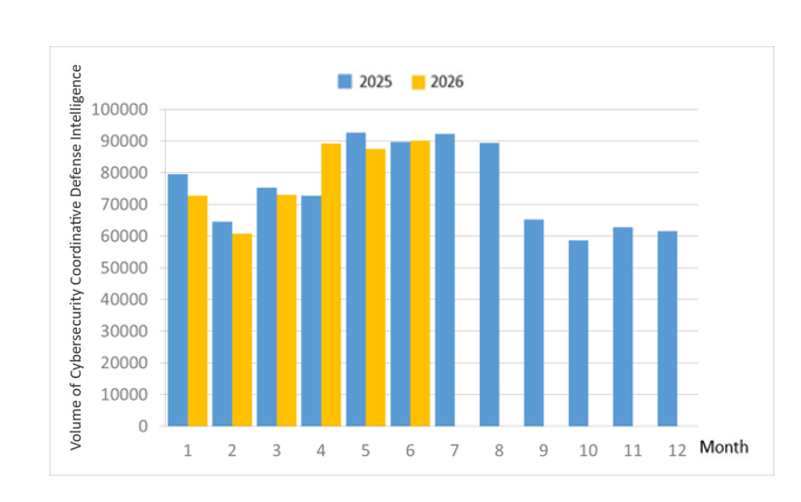
Figure 1: Statistics of cybersecurity monitoring intelligence in joint defense
Hackers are abusing free image sharing space as a platform for distributing malicious files.
Further aggregated analysis of joint defense threat intelligence reveals that hackers have recently been abusing Cloudflare R2 as a malware download site. Cloudflare R2 is an object storage service provided by Cloudflare that allows users to store and serve various files via the internet, such as images, videos, backups, software installers, and website content. However, threat actors are leveraging this service to distribute malware to evade cybersecurity detection mechanisms and ultimately achieve their goal of implanting malicious programs. Relevant intelligence and recommendations for joint defense monitoring and protection have been provided to all agencies.
In-process reporting and responding
A total of 187 cybersecurity incident notifications were reported this month (including 104 red teaming/cyber defense exercise cases), representing 1.12 times the volume reported in the same period last year. Unlawful intrusion was the main incident type, accounting for 62.50% of this month's total notifications. Findings from this month's defense exercise revealed that some agency websites allowed users to download files via direct links without login or authentication, or failed to properly disable the directory listing (Index of) function, enabling external parties to view directory structures and file contents. Additionally, outsourced websites were compromised due to predictable default administrative credentials that were successfully guessed. Detailed statistics on cybersecurity incident notifications over the past year are shown in Figure 2.
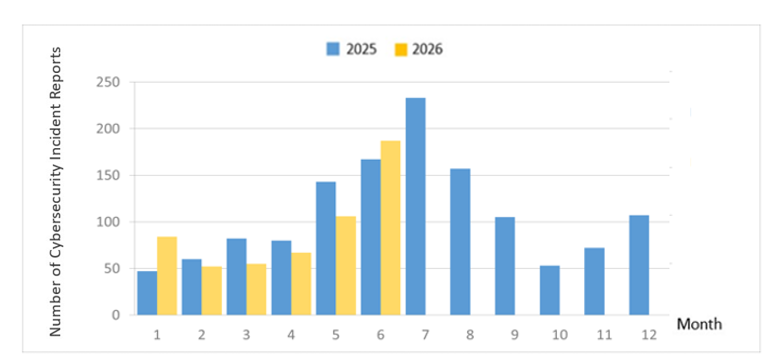
Figure 2: Statistics of cybersecurity incident reports
4.2 Important Vulnerability Alerts: Please refer to Appendix for more details
5. International Cybersecurity News
CISA Rewrites Federal Patching Requirements for AI Threat Era
Source: Dark Reading
CISA has revamped its federal patching mandate with a risk-matrix approach in its new Binding Operational Directive (BOD) 26-04. The directive requires federal agencies to remediate the most dangerous vulnerabilities within three days while formally allowing them to defer lower-risk issues. The new directive replaces two prior federal vulnerability remediation mandates and reflects growing concerns regarding AI-driven threats compounding the patching and remediation challenge. CISA has established a tiered remediation model where vulnerabilities are prioritized based on KEV catalog status, public exposure of vulnerable assets, if attackers can use automation for exploitation and whether exploitation provides partial or full system control. Agencies must also conduct forensic triage to determine whether affected assets were compromised. Federal agencies must update vulnerability management processes within 60 days and fully implement required measures for ensuring vulnerabilities can be remediated within the defined timelines within 180 days.
FCC Passes New Cybersecurity Rules for Emergency Systems, Undersea Cables
Source: Cyber Scoop
The FCC approved new cybersecurity rules to strengthen U. S. emergency alert systems’ cybersecurity and update security regulations for undersea cable providers. The new rules require participants to adopt cyber hygiene practices for accessing and updating the Emergency Alert System (EAS) and Wireless Emergency Alerts (WEA). Operators must use strong passwords, promptly install security patches and deploy firewalls to restrict equipment access. The FCC also created a new authentication ID system to verify alerts and prevent unauthorized or duplicate messages. Separate rules update submarine cable oversight, exempting some providers from national security licensing reviews if they self-certify to high security standards. The rule also offers FCC greater oversight over critical functions within undersea cable operations.
6. Cybersecurity Announcements
Hackers Use Spoofed Conference QR Codes for "Quishing" Attacks
While QR codes offer immense convenience, they also present security risks when abused by bad actors. In a recent real-world case, hackers altered official registration QR codes on public conference promotional posters to direct victims to malicious pages. Attendees who scanned the codes were led to phishing websites where they submitted registration data, resulting in privacy leaks. This attack technique is known as Quishing (QR Code Phishing), where phishing URLs are hidden within barcode images. The public must remain vigilant to avoid falling victim.
(1) Common Scenarios
A. Physical Overlays / Tampering: Malicious stickers pasted over genuine QR codes on event posters, parking meters, or shared bikes, or altered codes reprinted and posted in public areas.
B. Forged Notifications: Phishing emails impersonating IT departments asking for "account re-verification," or fake notices regarding order anomalies, tax refunds, or traffic fines.
(2) Protective Measures: "Stop, Look, and Listen"
A. "Stop" – Feel and Check: Before scanning physical codes, observe or touch the edges to check for physical sticker overlays or mismatched materials.
B. "Look" – Inspect URLs First: Use scanner apps that display a "URL Preview" (default camera apps on modern Android and iOS devices support this). Do not click instantly! Carefully check domain spelling (e.g., catching typos like micros0ft instead of microsoft). Exercise caution if the URL contains random strings or shortened links.
C. "Listen" – Verify Promptly: When encountering prompts promising discounts or demanding payment under threat of account suspension, do not enter credit card numbers, personal data, or download apps.
Verify the request through official channels. Pausing for a second, double-checking the URL, and verifying through official channels can protect both your wallet and personal data!
7. Recent Cybersecurity Meetings & Events
7.1 Public-Private Partnership to Strengthen SME Cybersecurity Defenses
To support the policy direction of "Government Backing Cybersecurity Protection", the ACS under the Ministry of Digital Affairs launched cybersecurity training courses and expert consultation services for small and medium-sized enterprises (SMEs) in 2026 to mitigate operational risks and turn cybersecurity into a competitive advantage. The items to be processed are as follows:
(1) Two Sessions of Free Cybersecurity Training ("Foundational Anti-Hacking & Data Protection"): Each 2-day session features practical lectures from security experts and case studies from industry leaders. Session 1 has concluded; Session 2 will take place on July 17–18 with both in-person and live-streamed options for SMEs nationwide.
(2) 100+ Free, 1-on-1 "Cybersecurity Expert Advisory Room" Consultations: Offers actionable guidance on hacker prevention and confidential data protection. Available from June 11 through late October (2 days per week, 3 sessions daily). Customized action proposals will be provided within 2 weeks post-consultation with active follow-ups.
7.2 Cybersecurity Officers Seminar: Held on July 16, inviting CISOs and IT security managers from Level-A and Level-B government entities, as well as expanded invitations to the Office of the President, National Security Council, Legislative Yuan, Judicial Yuan, Examination Yuan, Control Yuan, and specific non-governmental agencies to build a unified joint defense network.
Appendix: Major Vulnerability Alerts
| Alert Type | Category | Description |
|---|---|---|
| Vulnerability Alert |
Web Server Severity: (CVE-2026-42530: CVSS 8.1) (CVE-2026-42055: CVSS 8.1) |
• Researchers discovered a Use-After-Free vulnerability in NGINX's HTTP/3 module (ngx_http_v3_module, CVE-2026-42530) and a Heap Buffer Overflow in Proxy and gRPC modules (CVE-2026-42055). • Under non-default configurations, unauthenticated remote attackers could trigger memory corruption leading to Denial of Service (DoS) or arbitrary code execution if ASLR is disabled/bypassed. • Vendor advisory (K000161614) re-leased; immediate patching recom-mended. |
|
Mobile Gateway Severity: (CVE-2026-10520: CVSS 10.0) (CVE-2026-10523: CVSS 9.8) |
• OS Command Injection and Authentication Bypass vulnerabilities were identified in Ivanti Sentry (CVE-2026-10520, CVE-2026-10523). • Unauthenticated remote attackers could execute arbitrary code with root privileges or create admin accounts to gain full control. • Patches released; update immediately to versions 10.5.2, 10.6.2, or 10.7.1 or later. |
|
|
VPN & Network Security Check Point Security Gateways & Spark Firewalls Severity: (CVE-2026-50751: CVSS 9.3) |
• Certificate validation flaw discovered in IKEv1 implementation (CVE-2026-50751). • Unauthenticated remote attackers can bypass user authentication to establish Remote Access VPN connections and reach internal network resources. Active exploitation observed in the wild. • Patches and workarounds released; prompt updates recommended for the affected versions. |
|
|
Network Management Platforms Ubiquiti UniFi OS (Cloud Gateway, Dream Machine, UniFi OS Server, etc.) Severity: (CVE-2026-34908: CVSS 10.0) |
• CISA added CVE-2026-34908, CVE-2026-34909, and CVE-2026-34910 to the KEV list on June 23; cybersecurity vendors have observed threat actors chaining these three vulnerabilities to distribute malware and create unauthorized admin accounts. • The three vulnerabilities can be chained together: the former two are authentication gateway bypasses (improper access control and path traversal), and the latter is command injection in the package update function; unauthenticated remote attackers can obtain root privileges and completely control the device. |
|
| Known vulnerabilities exploited by hackers |
Network Management Systems Cisco Catalyst SD-WAN Manager Severity: CVE-2026-20262 (CVSS 6.5) |
• Added to CISA KEV on June 15. Cisco confirmed targeted zero-day exploitation. • Path traversal via improper file upload validation enables authenticated attackers to write/overwrite arbitrary files and escalate to root. |
|
Web Browsers Google Chrome (Chromium V8) Severity: CVE-2026-11645 (CVSS 8.8) |
• Added to CISA KEV on June 9 (the 5th exploited Chrome zero-day of 2026). • Out-of-bounds read/write in V8 JavaScript engine allows remote attackers to trigger heap corruption via crafted HTML pages to execute code within the sandbox. • Official patch released; Update Chrome/Chromium browsers immediately. |
Warning Explanation:
- "Vulnerability Warning": This is a verified vulnerability that has not yet been widely exploited by attackers. It is recommended to patch the vulnerability as soon as possible.
- "Known Vulnerabilities Exploited by Hackers": Successful attacks using this vulnerability are known. It is recommended to immediately evaluate and patch it.