Cybersecurity Monthly Report (September 2026)
Cybersecurity Monthly Report (September 2026)
1. Cybersecurity: Long Story Short
Subjecting two organizations to the exact same attack techniques resulted in one promptly detecting and responding, while the other remained entirely unaware until complete compromise. A real-world red team exercise demonstrates that no matter how sophisticated detection tools are, when the policies, processes, and personnel behind them fail to work in concert, alerts become nothing more than noise drowned in the background.
1.1 A Red Team Assessment with Polar-Opposite Outcomes
In August 2026, the Cybersecurity and Infrastructure Security Agency (CISA) published a red team assessment report [Note]. CISA selected two critical infrastructure entities (referred to as Organization A and Organization B) and deployed identical attack techniques, yet the outcomes were starkly different. In Organization A, the red team obtained domain administrator privileges, accessed sensitive business systems, and even infiltrated the email inboxes of Security Operations Center (SOC) personnel to confirm whether the intrusion was being monitored—all without facing any resistance. In contrast, Organization B detected and isolated the red team within minutes of operational execution. This assessment underscores that in cybersecurity defense, threat detection cannot rely solely on security tooling. More critically, personnel must understand the alerts, accurately assess risks, and hold the authority to take immediate action; otherwise, organizations merely maintain a fragile fortress built of stacked security tools.
1.2 Where Did the Differences Arise? Three Critical Factors Not on Any Procurement List
(1) Excessive Alert Information Obscuring True Threats
Assessment Findings:
Organization A had deployed multiple monitoring tools, including Endpoint Detection and Response (EDR). However, because it had not established clear baselines for normal behavior—such as the typical IP addresses and hours of employee logins, which endpoints communicate with each other, or which applications invoke specific APIs—the SOC received thousands of false alerts generated by routine business operations. This led to severe "alert fatigue" without any tuning of alert rules for filtering. As a result, medium- and low-severity alerts triggered by the red team were overlooked and never properly investigated or remediated. Conversely, Organization B established proper alert rules and filtering mechanisms, including automated detections tailored for anomalous login patterns and suspicious API traffic, enabling SOC personnel to take swift remediation actions upon receiving an alert.
Recommended Actions:
Organizations should establish normal behavioral baselines for detection mechanisms and continuously fine-tune detection rules, severity classifications, and alert thresholds according to actual operational environments. This ensures that genuine threats are identified and addressed in real time, transforming security detection tools from being merely "deployed" into capabilities that can "detect, evaluate, and remediate," while preventing critical threat intelligence from being drowned in alert noise.
(2) Seeing Alerts Is Not Enough: Those Who See Them Must Have the Authority to Act
Assessment Findings:
A security monitoring tool generating an alert does not mean the organization possesses real-time incident response capabilities. For instance, during this exercise, the red team triggered an alert on a server in Organization A. SOC personnel noticed it; however, because information across different SOC teams was siloed and lacked comprehensive documentation regarding managed systems, they could not verify the system owner, system functionality, or normal usage scenarios. Ultimately, the alert was closed as a false positive. This incident highlighted a lack of interdepartmental communication and information-sharing mechanisms, coupled with ambiguous incident handling responsibilities and escalation protocols. Even though monitoring tools raised alerts, the lack of communication channels to system owners or authorized decision-makers forced analysts to dismiss the risk as a false alarm, missing the remediation window and leaving the organization oblivious to full-scale compromise. In comparison, Organization B granted its SOC personnel direct remediation authority, allowing analysts to immediately isolate three compromised hosts within 20 minutes of verifying an alert. When the red team subsequently attempted to pivot toward the Operational Technology (OT) network, the anomalous activity triggered another alert, which SOC personnel immediately contained by restricting external traffic and isolating the target hosts.
Recommended Actions:
Organizations should establish standardized communication and escalation protocols between business units and the SOC. Incident handling roles and points of contact must be explicitly defined across departments to clarify "who evaluates, who holds the authority to act, and how escalation proceeds" when an alert arises. Furthermore, SOC analysts should be pre-authorized to execute immediate containment actions—such as host isolation, account lockout, or network blocking—accompanied by formal post-incident reporting and audit trail logging. This ensures threat propagation is suppressed at the earliest stage, evolving posture from "detecting alerts" to "containing incidents."
(3) Access Control Must Not Focus Solely on "Human Users"
Assessment Findings:
Returning to the opening scenario, the red team was able to read the email inboxes of Organization A's SOC analysts not through stolen user credentials, but via a cloud application configured with organization-wide mailbox read permissions—a level of access whose necessity had never been questioned or audited. In this assessment, while the two entities differed in endpoint detection and response capabilities, both were successfully compromised in their cloud environments due to similar vulnerabilities in identity governance and privilege management. The root cause lies in identity and access management practices that predominantly treat "human users" as the primary management subject, overlooking applications, service accounts, and API secrets—collectively known as Non-Human Identities (NHIs)—which possess identical or broader access privileges. Cloud security cannot merely ask "who can log in"; it must maintain full visibility into "which applications can access data, the extent of their permissions, and whether those privileges can be revoked immediately upon anomaly detection."
Recommended Actions:
Organizations should conduct a comprehensive inventory of permissions granted to applications, service accounts, and credentials, rigorously implement the Principle of Least Privilege (PoLP), and establish lifecycle management for tokens, secrets, and access keys. In addition, organizations should formulate incident response SOPs specific to cloud compromise to rapidly disable accounts and revoke credentials during an incident, expanding identity governance from "managing human users" to "rigorously governing non-human identities."
1.3 A Message to CISOs
Based on the findings from CISA's red team assessment, Chief Information Security Officers (CISOs) are advised to proactively assess their organizations across three dimensions:
(1) Detection tools must discern: Establish baselines of normal behavior and continuously tune alert rules to prevent critical threats from being lost in high volumes of alerts.
(2) Response mechanisms must act: Clearly define the authority and responsibilities of the SOC and related units, granting operational authorization for isolation and containment so immediate actions can be executed upon detection.
(3) Privileges must be governed: Enforce least privilege and robust cloud access controls; extend identity governance beyond human user accounts to encompass non-human identities such as applications, service accounts, and access tokens.
2. Recent Policy Highlights
2.1 Promulgating Taiwan’s Policy for Addressing Frontier AI Cybersecurity Risks to Address Emerging Challenges
In response to emerging threats—such as frontier AI lowering the barrier to entry for cyberattacks and accelerating the weaponization of vulnerabilities—the Administration for Cyber Security (ACS) of the Ministry of Digital Affairs (MODA) released Taiwan’s Policy for Addressing Frontier AI Cybersecurity Risks on September 4. Anchored around the strategic core of "accelerating defense, enhancing the security of ICT products, and bolstering national cyber resilience," the policy rolls out initiatives across short-, medium-, and long-term horizons:
(1) Short-Term Strategy — Accelerate Cyber Defense and Reduce Current Exposure:
Prioritize fine-tuning existing response frameworks and deploying immediately actionable defensive tools to drastically shorten the turnaround time between vulnerability discovery, impact assessment, and full remediation.
(2) Medium-Term Strategy — Strengthen ICT Product and Supply Chain Security:
Extend the scope of governance across products and supply chains, systematically implementing Secure-by-Design principles throughout government procurement, product lifecycle security, and vendor risk management.
(3) Long-Term Strategy — Deepen International Cooperation and Build Domestic AI-Enabled Cyber Defense Capabilities:
Proactively secure access to state-of-the-art international AI models, reinforce critical threat intelligence sharing mechanisms, and foster cross-sector synergy among industry, government, academia, and research institutions to cultivate domestic AI-Enabled cybersecurity capabilities.
2.2 Issuing the Cybersecurity Management Guidelines for Electronic Signage
to Safeguard Public Spaces
On September 16, the Administration for Cyber Security released the Cybersecurity Management Guidelines for Electronic Signage. The guidelines direct public sector agencies to enforce critical controls, including network segmentation and perimeter defense, content publishing mechanisms, outsourcing and third-party supply chain management, real-time mechanisms to block and take down disinformation and unauthorized broadcasts. Additionally, outsourced facility operators managing public premises and specific non-government agencies are encouraged to adopt these guidelines to reinforce self-governance, thereby strengthening overall cyber resilience and defense capacity across diverse sectors.
3. Recent Cybersecurity Incident Sharing
3.1 Failure to Implement Authentication in API Data Access May Lead to Personal Data Breaches
Recently, access control vulnerabilities were identified in an Application Programming Interface (API) used for data exchange between a government agency's website and its backend system. This API primarily serves a member data query function; by simply submitting a member ID, the system returns corresponding personal data, including the individual's national identification number, full name, phone number, and email address.
The critical flaw leading to this personal data leakage is that the system neither confirmed whether the user was successfully authenticated nor verified whether the user possessed authorization to access that specific record. Consequently, an attacker can bypass the website’s normal user interface workflow, invoke the API directly, and sequentially modify the member IDs to retrieve other users' personal information record by record—creating a severe risk of large-scale data breaches.
This incident demonstrates that while APIs serve as essential channels for inter-system data exchange, the absence of robust authentication and authorization mechanisms can turn them into severe security loopholes. Beyond verifying "whether a user can log in," systems must further verify "what specific data the user is permitted to access"—rigorously applying API authentication, the Principle of Least Privilege, and well-defined security boundaries.
3.2 Lessons Learned
Attackers frequently probe and exploit web APIs. Because APIs are designed for direct programmatic data exchange between systems—often using predictable, structured request and response formats—they allow direct retrieval of structured data via built-in system functionalities. Once attackers identify API endpoints and usage patterns, they can deploy automated scripts (such as web scrapers) to repeatedly issue requests and harvest massive volumes of data. If an API has flaws in authentication or access control, attackers can access unauthorized data through legitimate API functions without ever needing to compromise the backend database directly, significantly expanding the blast radius of data theft. In light of this, organizations should implement the following security countermeasures:
(1) Enforce Backend Authentication and Access Control Checks
Because attackers can bypass frontend client validations and directly invoke APIs, any API handling personal data or non-public operational information must not rely solely on frontend controls. Authentication must be verified strictly on the backend. Organizations must inspect user roles, operational permissions, and data ownership in accordance with the Principle of Least Privilege to verify both authorization status and accessible scopes. Furthermore, systems must defend against Broken Object Level Authorization (BOLA / IDOR) risks, where an attacker alters IDs, case numbers, or other object identifiers within an API request to view unauthorized data belonging to other users.
(2) Properly Manage API Keys and Credentials
For APIs relying on API keys as access credentials, appropriate permissions and scopes should be defined based on the Principle of Least Privilege. Avoid sharing a single API key across multiple services or assigning excessive privileges. API keys must never be hardcoded into frontend client code, checked into public repositories, or stored in insecure locations. Establish a complete key lifecycle management process, including regular rotation, deactivation, and revocation. If an API key is compromised, organizations should have the capability to revoke and reissue it immediately to minimize the scope of damage.
(3) Adopt Unpredictable Identifiers to Mitigate Enumeration Risks
Resource identifiers used in APIs (such as user IDs, case numbers, or object IDs) should avoid predictable, sequential, or incremental formats. Following OWASP guidelines, organizations should adopt unpredictable, randomized identifiers or Universally Unique Identifiers (UUIDs) to reduce the risk of automated enumeration and brute-force guessing. However, this serves only as a supplementary defense-in-depth measure and must never replace robust backend authentication and authorization checks.
(4) Restrict API Response Data Scope
APIs must adhere to the Data Minimization principle, returning only fields necessary for the specific business function and avoiding excessive data exposure. Response fields and scopes should be tailored to user roles and operational contexts. In particular, sensitive or high-risk data elements should be masked or partially disclosed to minimize data exposure.
(5) Implement API Rate Limiting and Throttling
Appropriate request rate limits, traffic quotas, or volume caps should be configured based on the API’s business purpose. When necessary, establish throttling controls based on user accounts, source IP addresses, or API keys to prevent automated scripts from continuously harvesting large amounts of sensitive data. Robust blocking and alerting mechanisms should be deployed to detect and mitigate anomalous behavior, such as high-volume queries generated within short time intervals.
4. Cybersecurity Trends
4.1 Ex ante joint defense and monitoring
(1) Threat Intelligence Statistics
This month, a total of 91,731 cybersecurity joint defense intelligence items were collected from government agencies (an increase of 14,014 items compared to the previous month). Among identifiable threat categories, information collection ranked first (59%), primarily involving the acquisition of information through techniques such as scanning, probing, and social engineering. This was followed by intrusion attempts (21%), mainly involving attempts to access unauthorized hosts, and intrusion attacks (8%), most of which involved unauthorized system access or the acquisition of system or user privileges. The distribution of intelligence volume over the past year is shown in Figure 1.
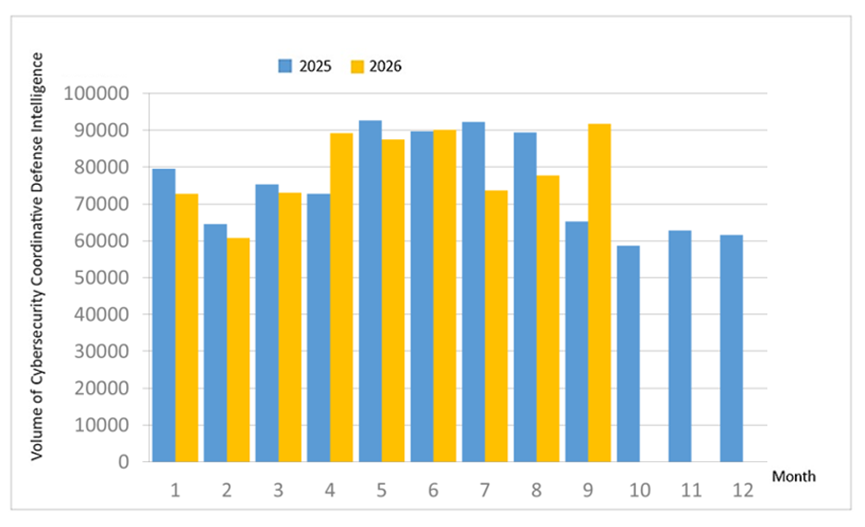
Figure 1: Statistics of cybersecurity monitoring intelligence in joint defense
(2) Monthly Intelligence Analysis: Hackers Deploy Trojans via Malicious Emails to Steal Sensitive Information
Further aggregation and analysis of joint defense intelligence revealed that threat actors have recently been distributing ValleyRAT via malicious emails to exfiltrate sensitive data from targeted computers. ValleyRAT is a Remote Access Trojan (RAT) equipped with capabilities such as keystroke logging, screen capture, and the theft of files and sensitive information. Attackers can remotely control infected hosts and execute commands to download and run additional malicious modules, thereby escalating the scope and impact of the compromise. Relevant threat intelligence, along with joint defense monitoring and defensive recommendations, has been provided to government agencies.
4.2 In-process reporting and responding
A total of 204 cybersecurity incidents were reported this month (including 95 cyber defense exercise incidents), representing 1.94 times the volume from the same period last year. Illegal intrusion was the primary incident type, accounting for 50.98% of total reports this month. This month, it was identified that website APIs across certain agencies lacked robust authentication and access control mechanisms, leading to unauthorized access and the leakage of non-public data. For statistics on cybersecurity incident notifications over the past year, please refer to Figure 2.
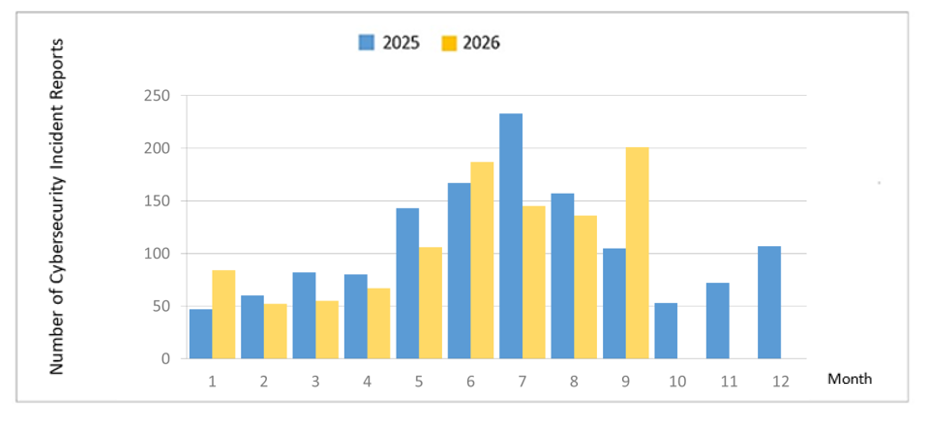
Figure 2: Statistics of cybersecurity incident reports
5. International Cybersecurity News
5.1 Vulnerability in NVIDIA NemoClaw Allows Malicious Websites to Hijack OpenClaw AI Agents
Source: Hack Read
NVIDIA NemoClaw is a tool designed to deploy the OpenClaw AI Agent, utilizing the OpenShell sandbox to restrict the agent's access to the host environment and pairing with Ollama to run AI models locally. However, cybersecurity firm Oasis Identity Research revealed the existence of vulnerability CVE-2026-65105 within the tool. This vulnerability allows an attacker to gain unauthenticated access to the local Ollama model server after a user visits a malicious webpage.
Although Ollama can restrict remote websites from accessing local services via browser-origin checks and Host header validation, attackers can bypass these origin checks using DNS rebinding techniques. This grants the browser unauthenticated access to the victim's local Ollama API, allowing attackers to run, download, or delete models; read or modify model templates and system prompts; and leverage the victim's GPU to perform model inference. Other devices on the same local area network (LAN) may also access this API directly. Furthermore, attackers can modify a model's Chat Template to inject hidden instructions, causing malicious content to persistently compromise subsequent conversations and AI agent operations. (As of the initial disclosure, no evidence of active in-the-wild exploitation had been observed; NVIDIA has since released a security update).
5.2 US Accuses Certain Chinese AI Firms of Illicit Model Distillation
Source: Bank Info Security
On September 8, 2026, the Cybersecurity and Infrastructure Security Agency (CISA), National Security Agency (NSA), and Federal Bureau of Investigation (FBI) jointly issued an advisory alleging that several Chinese AI companies—including DeepSeek, Moonshot AI, and Alibaba—have been bypassing geographic restrictions and security mechanisms via intermediate proxy servers since 2024. These activities were distributed across multiple platforms to minimize the risk of detection.
The companies then allegedly leveraged APIs to generate millions of interactions and requests targeting advanced U.S. AI models—including Anthropic's Claude, OpenAI's GPT, Google's Gemini, and xAI's Grok. Through this process, they harvested billions of tokens to extract reasoning, software engineering, and other capabilities via "model distillation" to train their own proprietary models. U.S. authorities stated that such practices inflict severe economic damage, leak proprietary technology, and erode the competitive edge of American enterprises. The agencies urged the industry to strengthen detection and mitigation measures against suspected model distillation and establish cross-organizational intelligence sharing for proactive defense.
5.3 Google Warns of New Actively Exploited Chrome Zero-Day Vulnerability
Source: Bleeping Computer
On September 8, Google released a stable channel update for Chrome 153 to address 230 security issues, including a high-severity zero-day vulnerability (CVE-2026-87491) actively exploited in the wild. Reported by research intern Jihyeon Jeong from Seoul National University's Compsec Lab, the vulnerability stems from an out-of-bounds write defect in Chrome's V8 JavaScript and WebAssembly engine.
A remote attacker can exploit this flaw via a specially crafted HTML page to execute arbitrary code within the Chrome sandbox. Exploitation may also cause heap corruption, allowing attackers to access memory outside the allocated buffer boundaries, leading to sensitive data exposure or browser crashes. Google has released the Chrome Desktop Stable Channel Update across Windows, Mac, and Linux. Because global rollout may take days to weeks and active attacks have been observed, users are advised to update manually or restart Chrome immediately to apply the patch and minimize exposure to potential threats.
Appendix: Major Vulnerability Alerts
| Alert Type | Category | Description |
|---|---|---|
| Vulnerability Alert |
Application Server Oracle WebLogic Server Severity: CVE-2026-83021: CVSS v3.1 10.0 CVE-2026-83038: CVSS v3.1 9.9 |
|
| Email Security Appliance Cisco Secure Email Gateway (SEG) / Secure Email and Web Manager (SEWM) Severity: CVE-2026-76440: CVSS v3.1 9.8 CVE-2026-76441: CVSS v3.1 9.8 CVE-2026-20353: CVSS v3.1 9.8 CVE-2026-76443: CVSS v3.1 9.8 |
|
|
| Mobile Device Management System Ivanti Endpoint Manager Mobile (EPMM) Severity: CVE-2026-18851: CVSS v3.1 8.8 |
|
|
| Known Exploited Vulnerabilities | Enterprise Development Platform GitLab CE / EE Severity: CVE-2026-85706: CVSS v3.1 10.0 CVE-2026-87719: CVSS v3.1 9.9 |
|
| Firewall & VPN Appliance Check Point Security Gateway / Spark Firewall Severity: CVE-2026-85102: CVSS v3.1 9.8 |
|
|
| Application Delivery & VPN Appliance Citrix NetScaler ADC / Gateway Severity: CVE-2026-88771: CVSS v3.1 9.8 CVE-2026-88772: CVSS v3.1 8.1 |
|
|
| Enterprise Collaboration Platform Microsoft SharePoint Server Severity: CVE-2026-65660: CVSS v3.1 8.8 |
|
Alert Explanation:
"Vulnerability Alert": This is a verified vulnerability that has not yet been widely exploited by attackers. It is recommended to patch the vulnerability as soon as possible.
"Known Exploited Vulnerabilities": Successful attacks using this vulnerability are known. It is recommended to immediately evaluate and patch it.