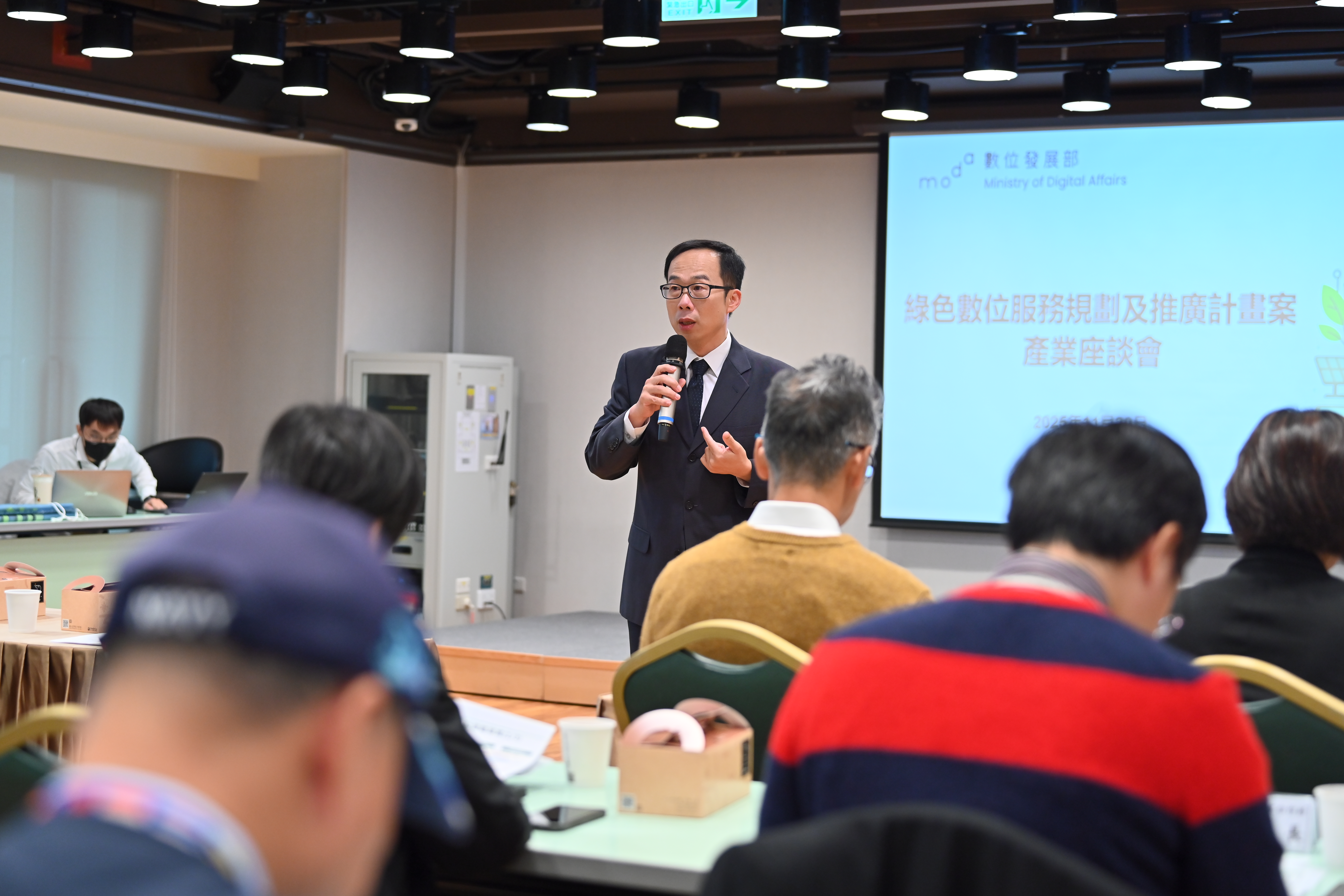
MODA Holds Industry Seminar to Discuss Promotion of "Green Digital Services"
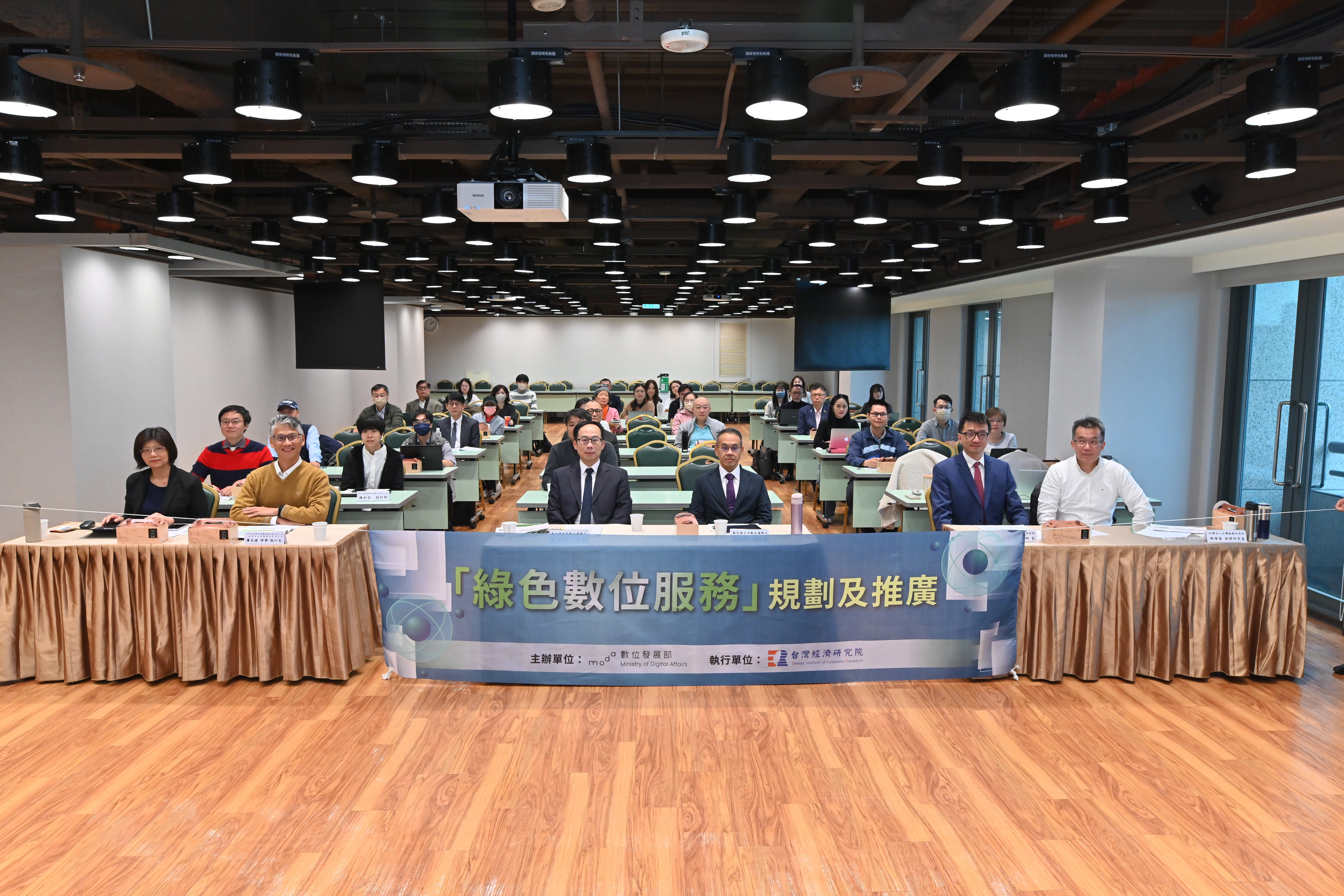
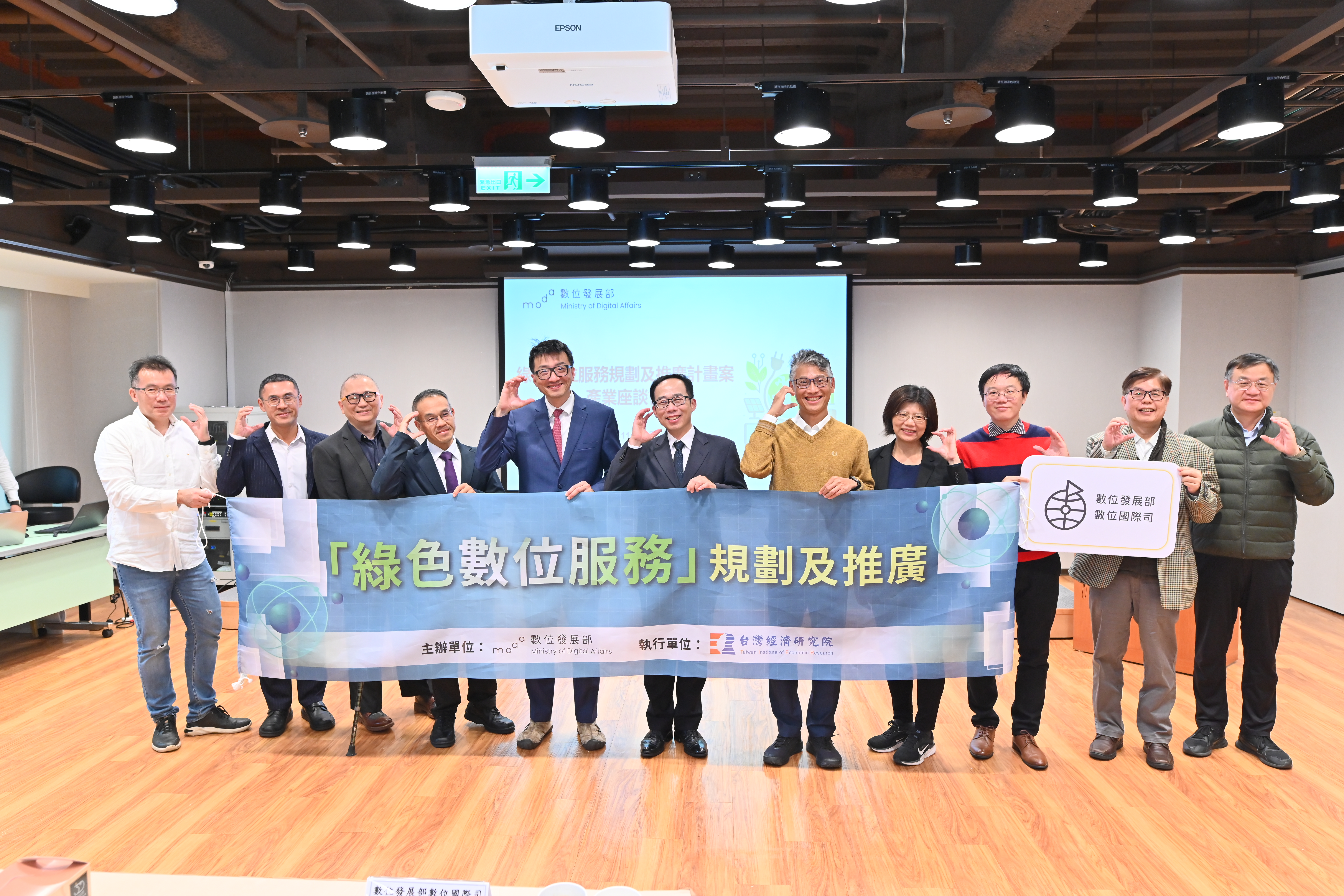
The Ministry of Digital Affairs (MODA) held the "Green Digital Service Development" industry seminar today (20th), to exchange initial ideas regarding green digital services and a voluntary green software labeling system, and to extensively gather input from interested stakeholders. The seminar brought together representatives from the Taiwan Innovative Software and Services Association (TISSA) and companies in software development, cloud services, cybersecurity, AI applications, system integration, and verification consulting. By fostering two-way dialogue between government and industry, the goal was to forge a strong public-private partnership consensus, laying a solid foundation for the subsequent design and promotion of relevant initiatives.
Director Eric Juang of MODA’s Department of International Cooperation stated that promoting green digital services is an important approach that echoes the Office of the President’s National Climate Change Committee’s “Green and Digital Dual-Axis Transformation” and the Sustainability Alliance's "Enhancing Green Procurement and Building a Carbon Reduction Ecosystem" policies. He further explained that promoting green digital services and the green software labeling system will not only help Taiwan align with international trends, but also boost the cultivation of the software industry's capabilities and its sustainability transformation. Future regulations will prioritize linking with existing carbon reduction policies to expand market demand and facilitate industrial adoption. He also emphasized the importance of increasing awareness and providing training for relevant personnel. Facing the global net-zero trend, if domestic manufacturers can enhance their green software development and sustainability management capabilities, they will be better positioned to seize new opportunities for international cooperation and market expansion.
MODA indicated that, to date, it has convened six expert consultation meetings and two expert seminars, while also conducting in-depth interviews with five representative enterprises. Through these extensive efforts, opinions from all sectors have been broadly collected and consolidated, steadily building consensus and shaping a feasible, widely supported policy direction. This industry seminar invited an even broader range of industry representatives to participate, with the aim of incorporating frontline practical experience during the policy development stage, thereby enhancing the feasibility of the future system once implemented.
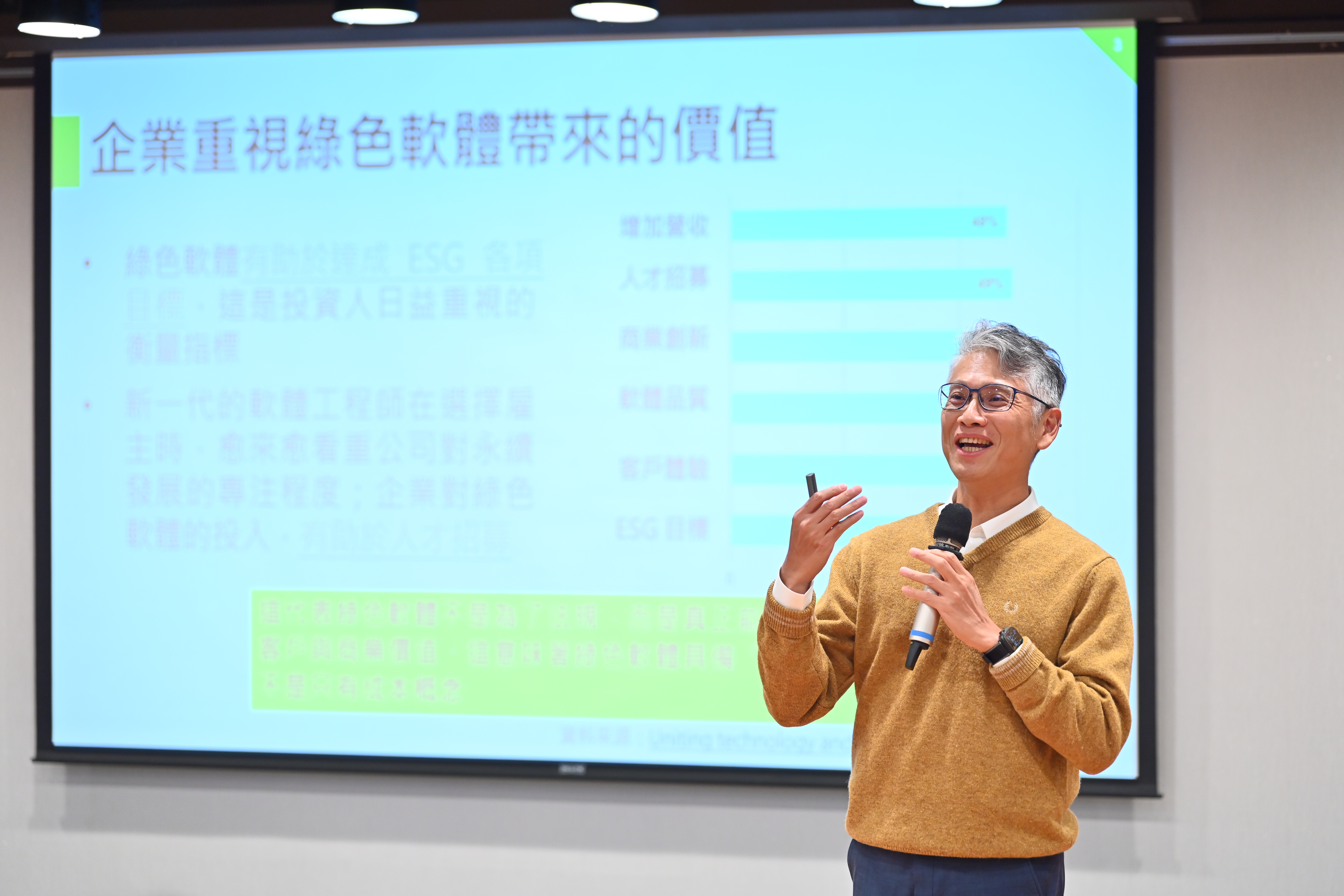
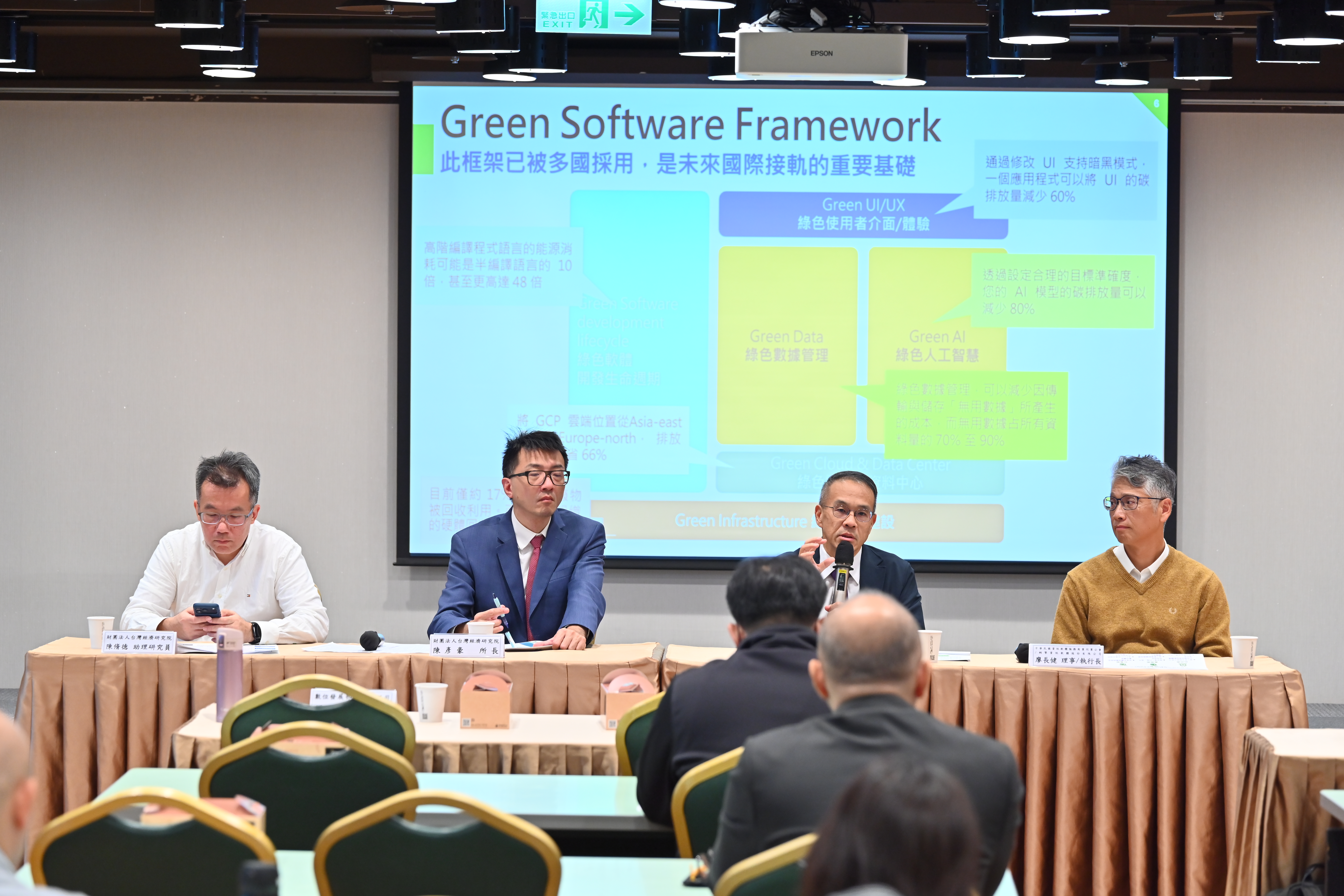
At the event, TISSA Chairman Liao Chang-chien spoke on behalf of the industry, emphasizing the critical importance of sustainable development in the software sector. He stressed that by establishing practical, well-aligned support mechanisms, a virtuous cycle between supply and demand can be sustained. Attendees from industry then actively engaged in lively exchanges, fostering a constructive and ongoing dialogue mechanism between the government and industry.
MODA emphasized that it will continue to refine the design and promotion strategy of the voluntary green software labeling system, incorporating the recommendations gathered from this seminar as well as prior consultations. Additionally, a project results presentation will be held on November 25, with invitations extended to enterprises, university faculty, and students. The event will aim to further promote the adoption of green software and raise public awareness of its importance.