MODA Promotes Strategic Alignment for AI Development Amid Deepening Digital Cooperation Following Taiwan-U.S. Economic Prosperity Partnership Dialogue
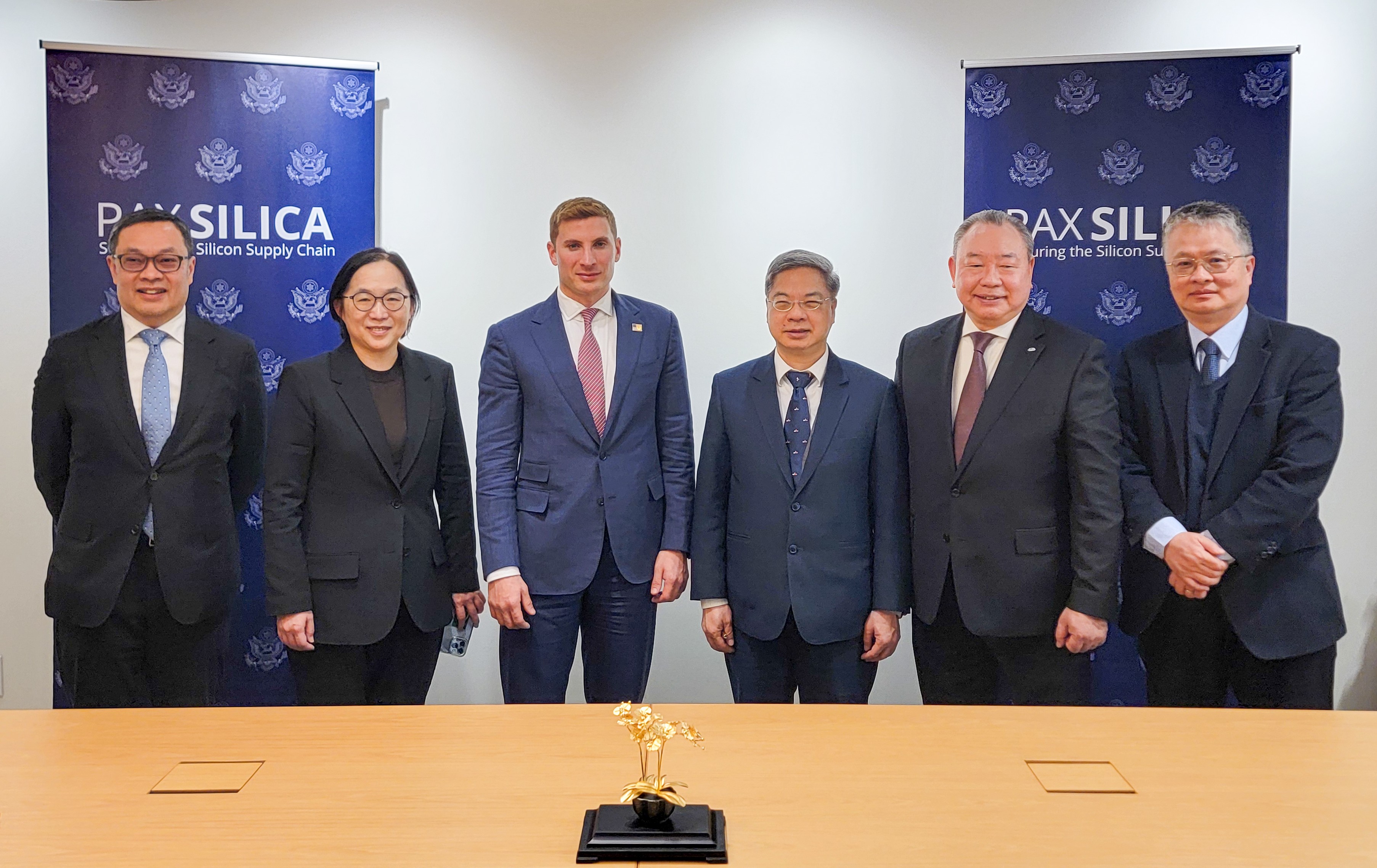
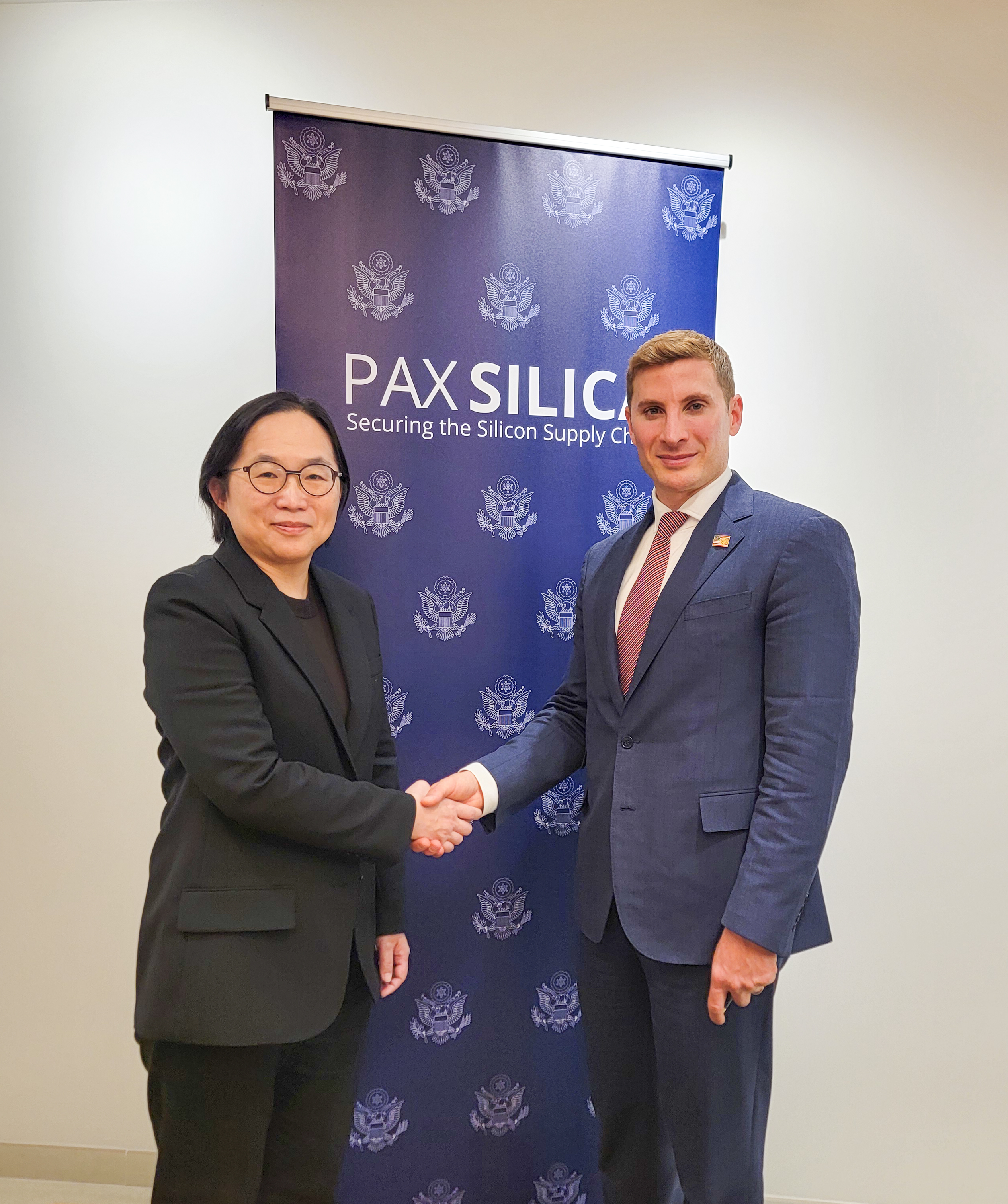
Isabel Hou, Deputy Minister of the Ministry of Digital Affairs (MODA), recently traveled to Washington, D.C. to attend the sixth Taiwan-U.S. Economic Prosperity Partnership Dialogue (EPPD). She met with relevant U.S. agencies and reached a consensus with senior U.S. officials on deepening cooperation in several areas, including AI governance, communications resilience, and the development of the digital industry. Deputy Minister Hou pointed out that Minister Lin Yi-jing of Digital Affairs strongly advocates the use of five major policy tools—computing power, data, talent, marketing, and funding—to assist Taiwan's digital industry in accelerating the adoption of core AI strategies. Through strategic alignment between Taiwan's Five Trusted Industry Sectors and Ten Major AI Infrastructure Projects, and America’s AI Action Plan, MODA will continue to implement practical exchanges between Taiwan and the U.S. in the digital field.
Following the Pax Silica Summit held in the U.S. last December, Deputy Minister Hou recently traveled to Washington, D.C. to attend a high-level EPPD meeting and witness the signing of the Joint Statement on the Pax Silica Declaration and U.S.-Taiwan Cooperation on Economic Security. This underscores MODA's key role in promoting digital policy and international exchange. Through continuous investment in various areas, MODA meets the requirements for international cooperation and alignment as provided in the Artificial Intelligence Fundamental Act.
Deputy Minister Hou further pointed out that “trust” is the core foundation of AI development. Under the vision of Pax Silica, Taiwan is not only a key node in the global AI hardware supply chain, but also an important strategic partner in promoting a trustworthy AI ecosystem in terms of software. Cooperation between Taiwan and the U.S. will maximize the benefits of AI innovation while effectively addressing potential digital risks, thereby laying a reliable foundation for global digital development.
Deputy Minister Hou explained that in terms of AI governance, Taiwan and the U.S. have reached a consensus and are in discussion on promoting the development and application of a trustworthy traditional Chinese corpus in large language models (LLMs) to jointly shape a diverse and open sovereign AI data foundation. The discussion also explores cooperation in third countries to promote a trustworthy AI system.
MODA launched the Taiwan Sovereign AI Training Corpus last December. To date, more than 200 agencies have made contribution to the corpus, with more than 3,000 datasets and 1.1 billion tokens uploaded, covering multiple fields such as culture and art, language and vocabulary, and historical artifacts. MODA will continue to enrich corpus content and provide high-quality corpora with Taiwanese perspectives and cultural characteristics to support the training needs of the sovereign AI model.
Meanwhile, the U.S. supports Taiwan in exploring advanced communications technologies as part of a multi-faceted approach for enhancement of communications resilience. Joining forces with the U.S. and allied countries, Taiwan will establish “trusted connectivity” in the fields of submarine cables and other information and communication technology (ICT) infrastructure.
For submarine cable protection, MODA adopts a public-private partnership model to implement protection mechanisms. This includes strengthening the regulatory monitoring of flag of convenience (FOC) vessels and attaching aggravated criminal liability for damaging submarine cables. At the same time, MODA also supervises operators to conduct safety protection drills and subsidizes the construction of submarine cables, cable landing stations, and microwave backup systems. In addition, efforts are being made to encourage domestic telecommunications operators to align with international standards, adopt the latest protection technologies, and deepen transnational cooperation. For example, Chunghwa Telecom has joined the consortia of two major international submarine cable maintenance regional agreements.
In satellite communications, MODA is actively building a diverse satellite response network, and will explore cooperation with U.S. low-Earth orbit satellite service providers to enhance Taiwan’s overall communications resilience.
In addition, Taiwan and the U.S. reached a consensus to jointly promote the cultivation and development of AI talent and technology, and exchanged views on the AI Academy cooperation framework. In July 2025, MODA officially released the AI Industry Talent Recognition Guidelines, which defines three major areas: application, development, and research; and five major capability frameworks, namely competency, tools, programs, model training, and service development. Furthermore, it also incorporates certification information from major U.S. companies such as AWS, Microsoft, Google, and NVIDIA as capability reference indicators, in order to build a complete AI talent ecosystem and laying the foundation for the development of the digital industry.
The sixth EPPD was held in person in Washington, D.C. on January 27, Eastern Time. During the meeting, the Joint Statement on the Pax Silica Declaration and Taiwan-US Economic Security Cooperation was signed, highlighting Taiwan's importance in the AI supply chain. Both countries will continue to cooperate to build a safer, more prosperous, and innovation-driven Taiwan-U.S. partnership. Other Taiwanese officials attending this high-level meeting included Kung Ming-hsin, Minister of Economic Affairs, Chen Ming-chi, Deputy Minister of Foreign Affairs, Liu Kuo-wei, Deputy Minister of Education, Dr. Chang Pei-zen, President of the Industrial Technology Research Institute, as well as senior officials and experts from the National Science and Technology Council and other ministries.