Government Supports AI Through Open Data: Ministry of Digital Affairs Presents First Outstanding Open Text Corpus Awards
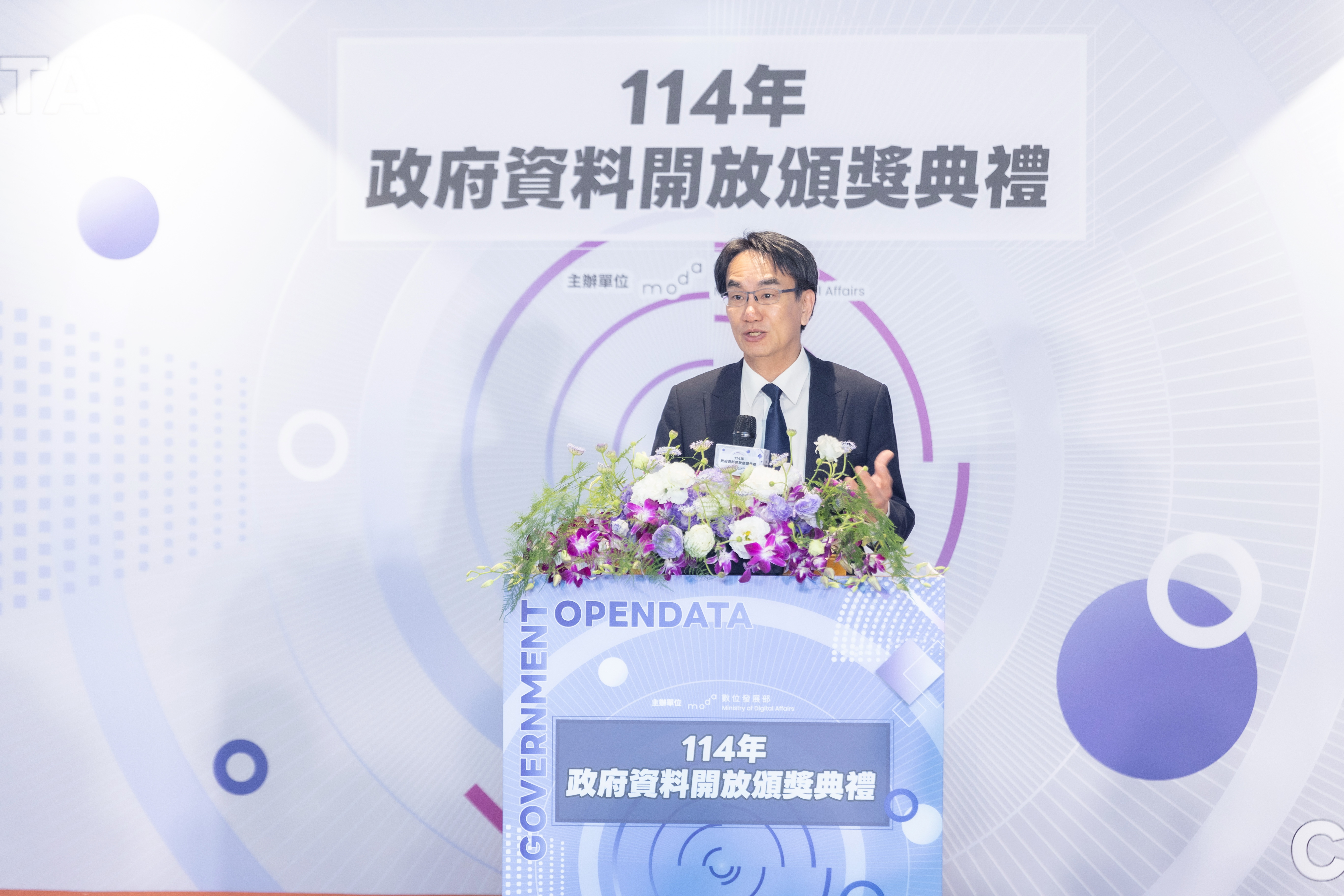
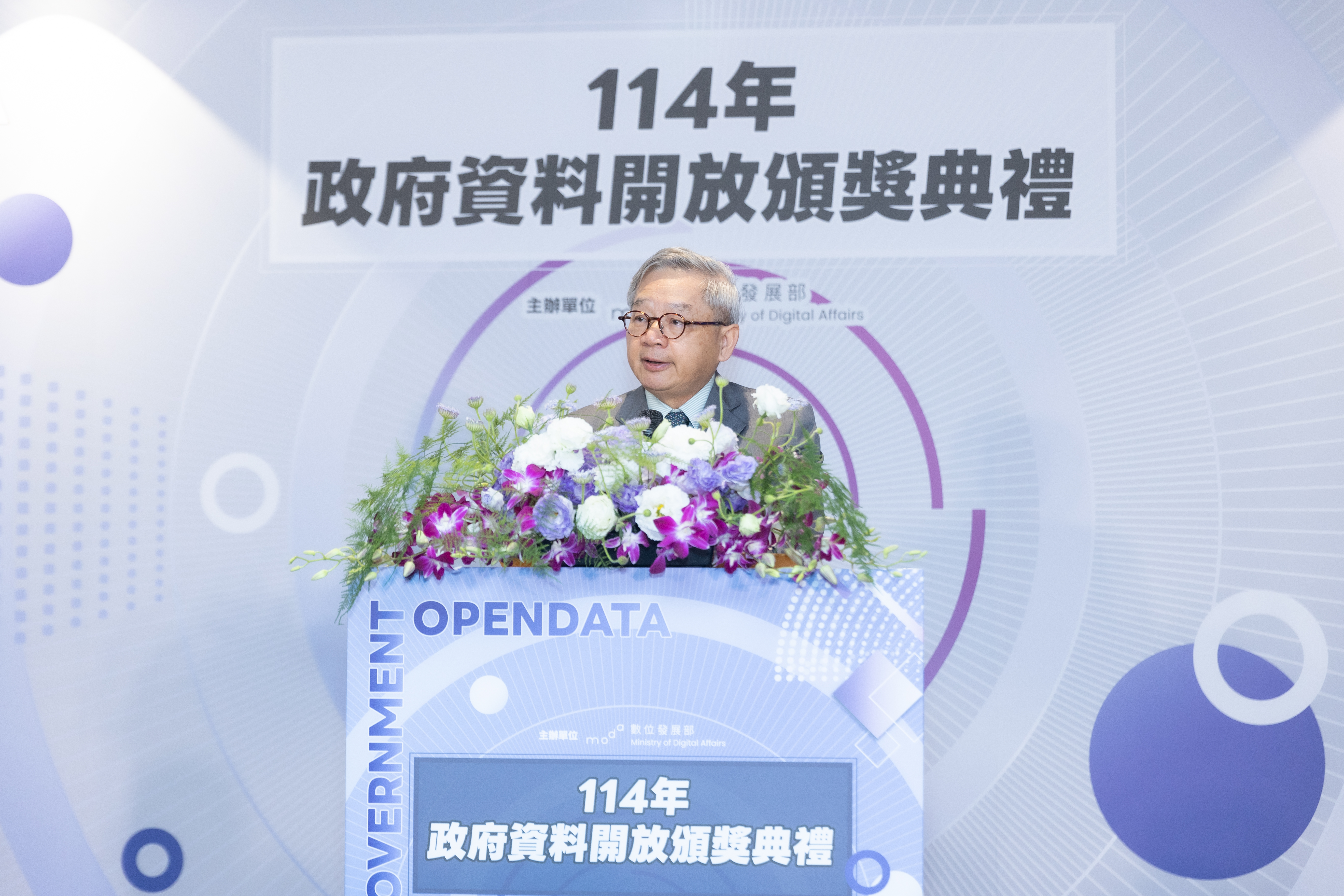
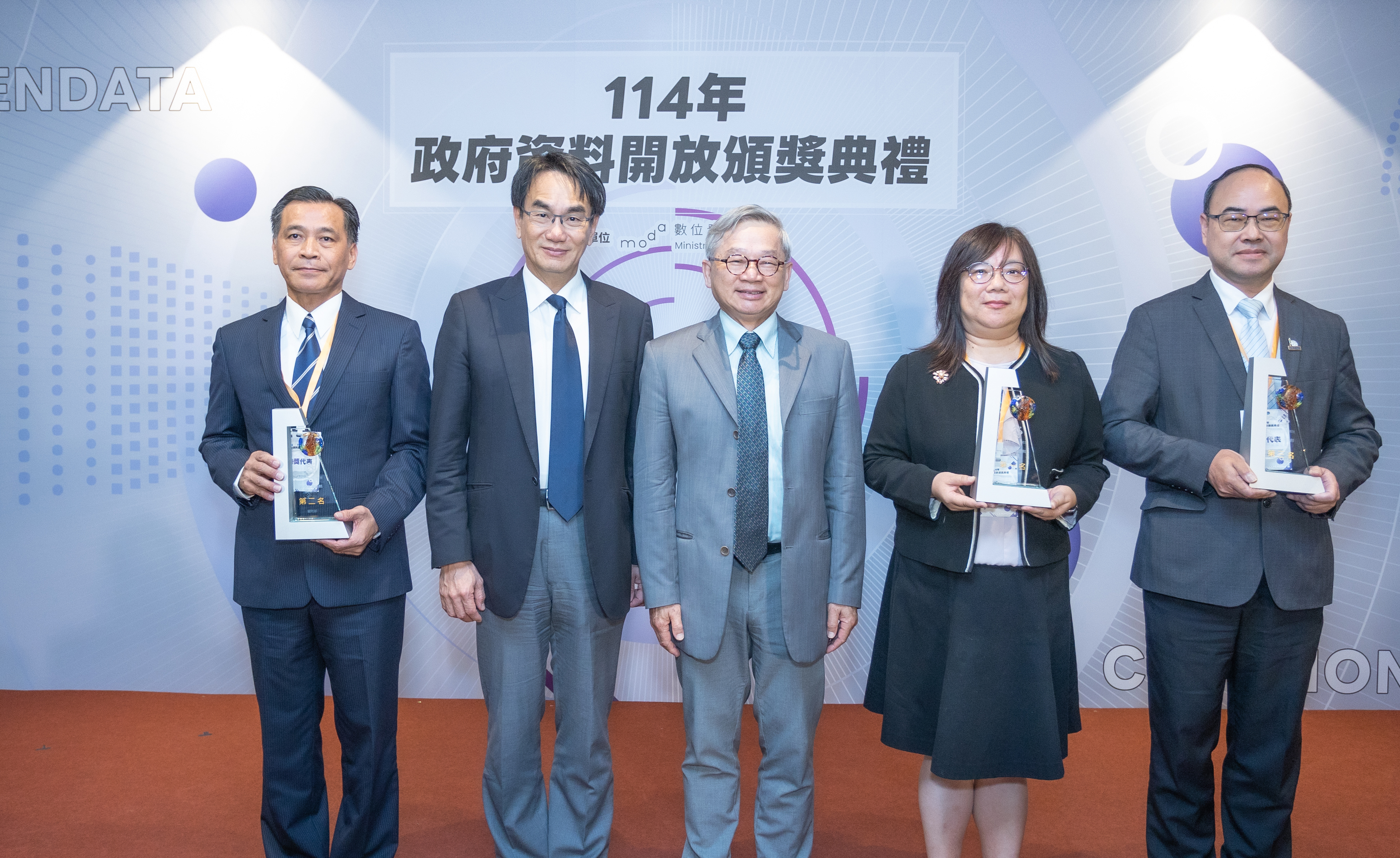
The Ministry of Digital Affairs held the “2025 Government Open Data Awards Ceremony” at the Taipei New Horizon Building this morning (1st) to recognize the outstanding achievements of central and local government agencies in open data, data governance, and innovative applications. Minister without Portfolio Wu Cheng-wen of the Executive Yuan and Minister Lin Yi-jing of the Ministry of Digital Affairs jointly attended the awards ceremony to recognize the long-term efforts of various government agencies and institutions in promoting open data. This year’s event also marked the debut of the “Outstanding Open Text Corpus Awards,” signaling that Taiwan’s government open data initiative has officially entered a new phase in supporting the development of artificial intelligence (AI).
Minister Wu stated that with the rapid development of generative AI, data has evolved from being merely an administrative resource into a key driver of innovative applications, enhanced governance efficiency, and stronger national competitiveness. In the age of AI, data is not only the foundation of public governance, but also a critical strategic asset for national development. In this context, the Executive Yuan has launched the “New Ten Major AI Infrastructure Projects” to further strengthen five key policy tools: computing power, data, talent, promotion, and funding. Among them, data governance and open data serve as the foundation and core drivers of this initiative. Looking ahead, the Executive Yuan will continue to advance institutional frameworks and policy initiatives to deepen cross-agency collaboration and data application, ensuring that government data is not only made available, but also effectively utilized to generate greater public value.
Minister Lin noted that Taiwan has been promoting government open data for more than a decade. To date, the Government Open Data Platform has accumulated more than 50,000 datasets across a wide range of fields, providing valuable resources for value-added applications across sectors. He further emphasized that data makes daily life more convenient. Drawing from his own experience, he noted that open data such as YouBike station locations and weather information has enabled him to directly appreciate how data can support and improve everyday life. Minister Lin further pointed out that, in an era of rapid AI advancement, AI derives its capabilities from data, making open data an essential foundation for AI training and development.
In response to this trend, Minister Lin also noted that the Ministry of Digital Affairs has established the “Taiwan Sovereign AI Training Corpus,” which provides Traditional Chinese-language datasets reflecting Taiwan’s cultural characteristics and perspectives for public access and use, serving as a key foundation for the development of sovereign AI. Since its launch in December 2025, the “Taiwan Sovereign AI Training Corpus” has rapidly expanded to include more than 1.2 billion tokens. Many government agencies have contributed high-quality corpora, such as the national cultural heritage materials provided by the Ministry of Culture, which reflect the historical memory of Taiwan’s land and people and help AI models better understand the country’s diverse cultural landscape. In addition, many domestic and international AI model developers have applied to use the corpus, including the TAIDE model, Twinkle AI, the Artificial Intelligence Evaluation Center (AIEC), and global AI companies such as Google. The Ministry also encourages organizations across sectors to actively apply for access and make use of these resources.
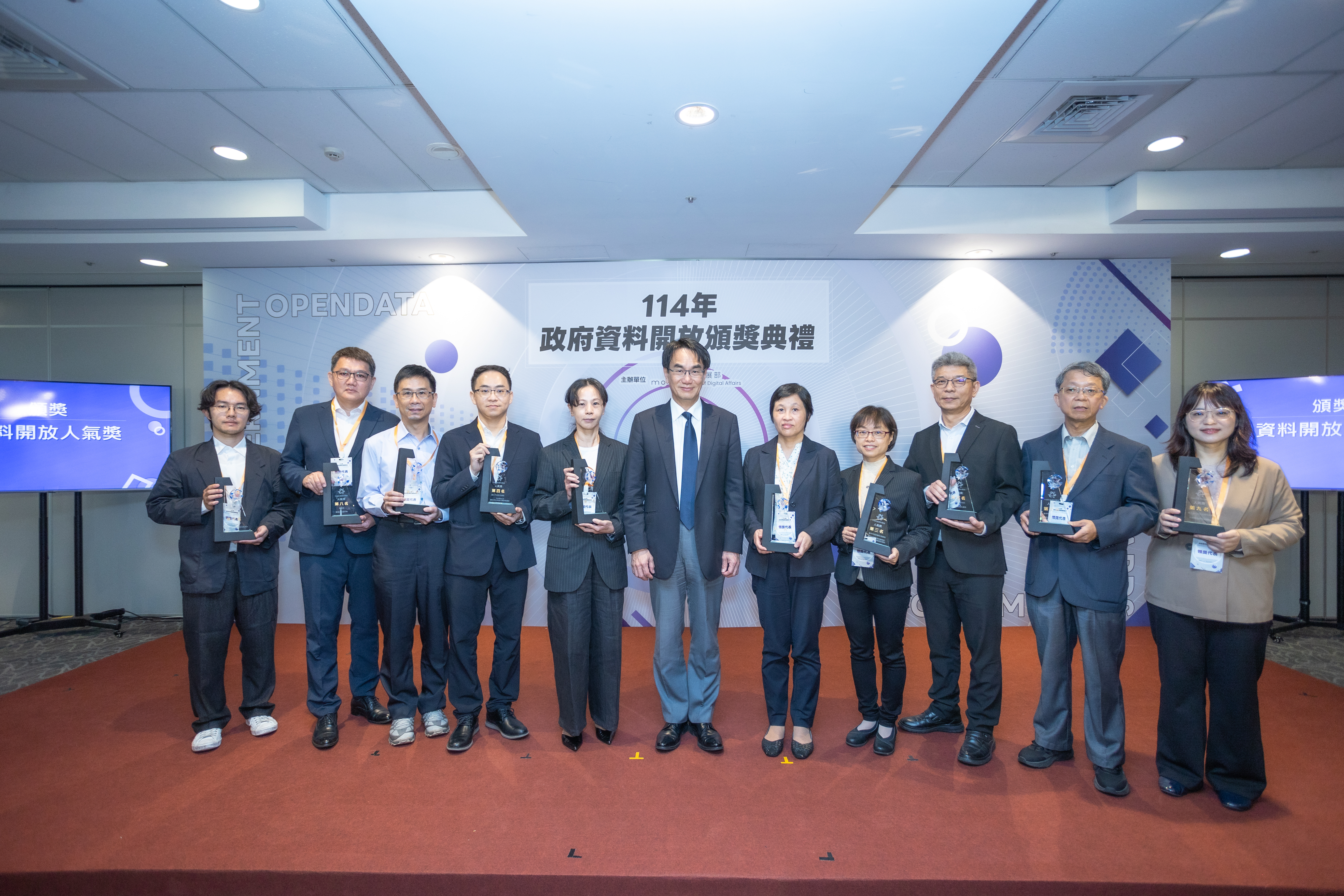
At this year’s awards ceremony, the Gold Award for Open Data was presented to the Ministry of Economic Affairs and the Taichung City Government, which won first place in the central government and local government categories, respectively. The Ministry of Economic Affairs was recognized for providing high-value datasets such as power generation costs, regional electricity consumption statistics, and reserve margin rates, which serve as important references for energy policymaking and industrial analysis. Meanwhile, the Taichung City Government has advanced urban planning and everyday applications through the opening of spatial information and urban governance data.
The Popular Choice Award for Open Data recognized a variety of distinctive datasets. For example, the Ministry of Agriculture’s “Animal Adoption” dataset integrates basic information on shelter animals across different regions, along with their adoption availability periods, helping promote stray animal adoption and matching more pets with loving homes. In addition, the YouBike 2.0 station and real-time bike availability data provided by the Taipei City and Taichung City governments allow citizens to check the number of available bikes and docking spaces in real time.
Meanwhile, the Ministry of Culture, the Ministry of National Defense, and the Ministry of Transportation and Communications received this year’s newly introduced “Outstanding Open Text Corpus Award.” These three ministries have contributed extensive archival corpora, policy documents, and research reports accumulated over many years, providing an important foundation for AI to better understand Taiwan’s local culture and public governance.
The Ministry of Digital Affairs emphasized that the value of open data lies not only in enhancing information transparency, but also in fostering cross-sector collaboration and social innovation. It also serves as a critical foundation for advancing the AI industry and building a robust AI ecosystem. Looking ahead, the Ministry will continue to strengthen data governance frameworks, enhance data quality and application capabilities, and work together with central and local government agencies, as well as industry and civil society, to build a digital Taiwan where data flows continuously and generates lasting value—making Taiwan’s data an important window through which the world can better understand the nation.