Connect Beyond! ADI’s Satellite Digital Application Innovation Competition Concludes; 20 Award-Winning Teams Showcase Taiwan’s Digital Resilience and Cross-Domain Strengths
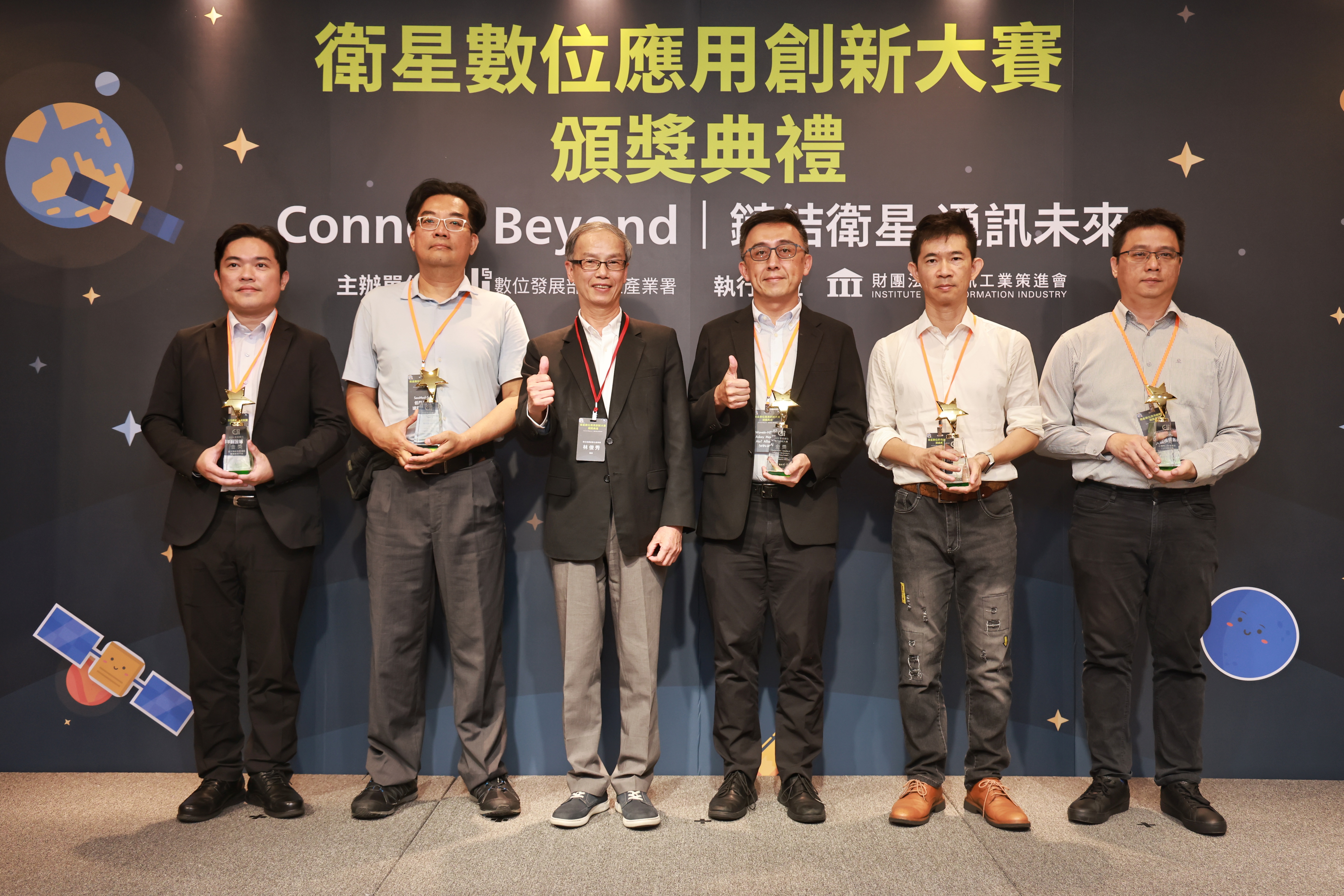
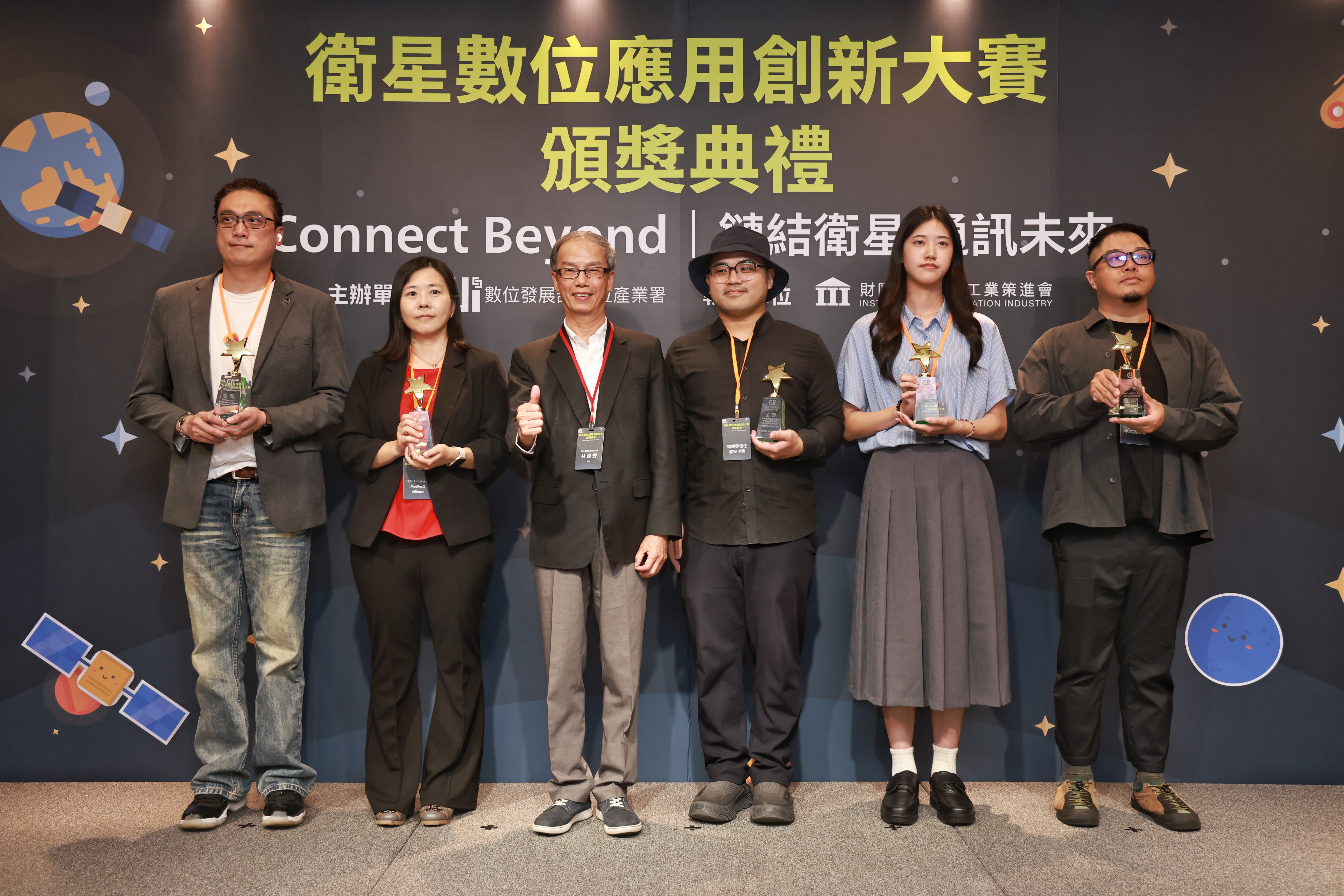
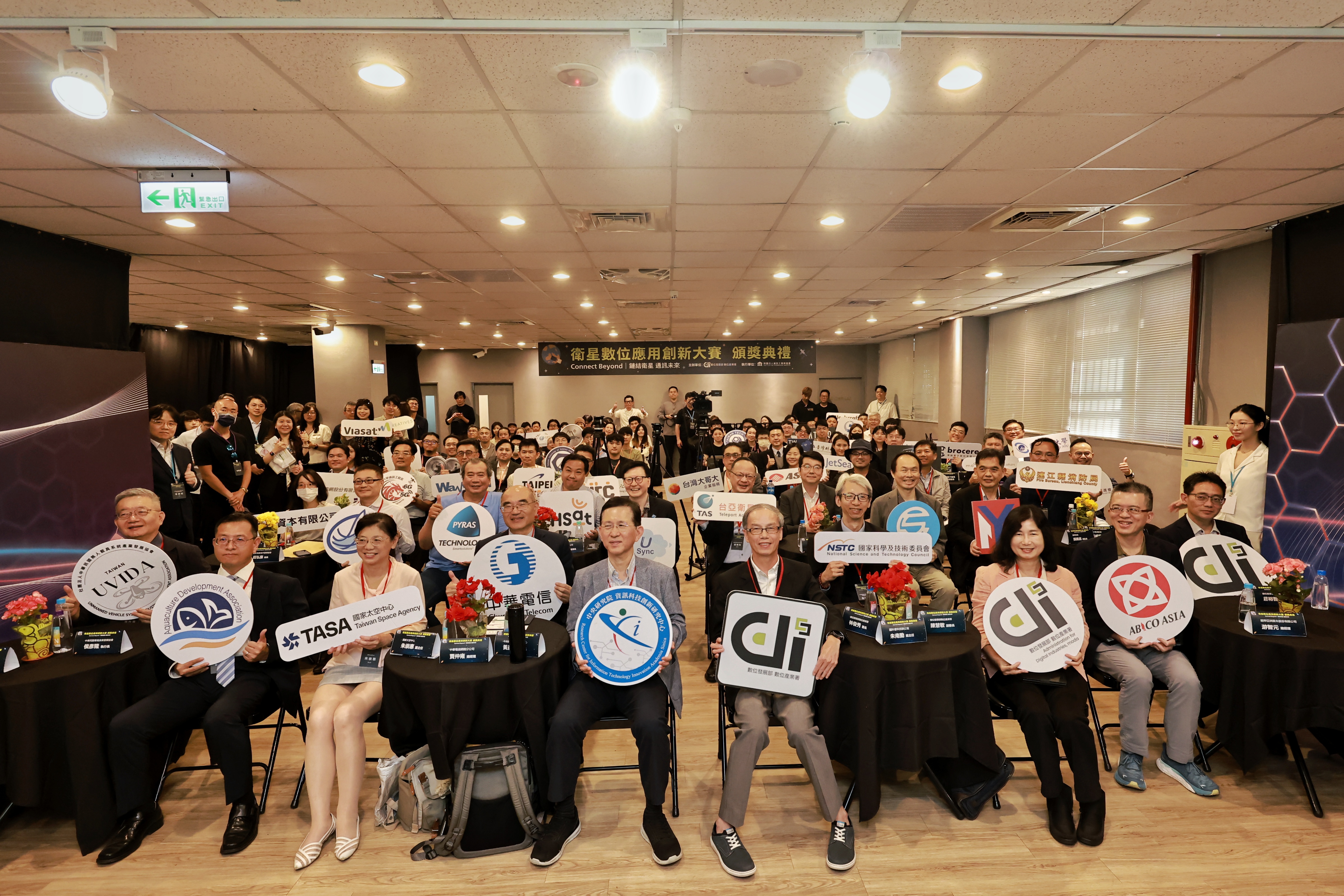
To drive the development of satellite application services in Taiwan and bolster digital resilience, the Administration for Digital Industries (ADI) of the Ministry of Digital Affairs (MODA) held the awards ceremony for the first “Satellite Digital Application Innovation Competition” today (April 14) at Building A, Taipei DigiBlock. With the theme “Connect Beyond: Linking the Future of Satellite Communications,” the competition attracted 131 teams nationwide following its launch last year. Ultimately, 20 teams were selected for the Gold Awards and Special Jury Awards, demonstrating Taiwan’s innovative strengths in satellite communications, positioning, and remote sensing. The event brought together prominent experts from industry, government, and academia, Executive Director Yen-Nan Huang of the Cybersecurity Research Center, Academia Sinica, Deputy Director General Chung-Huei Chu of the Taiwan Space Agency (TASA), CEO Hou Yen-lung of the Aquaculture Development Association, General Manager Yu-Chun Kuo of Teleport Access Services, and Alvin Chen, CEO of Creative5, who gathered to witness this pivotal moment for Taiwan’s satellite applications.
Industry-Driven Challenges, Team-Based Solutions: Facilitating Real-World Implementation of Satellite Applications
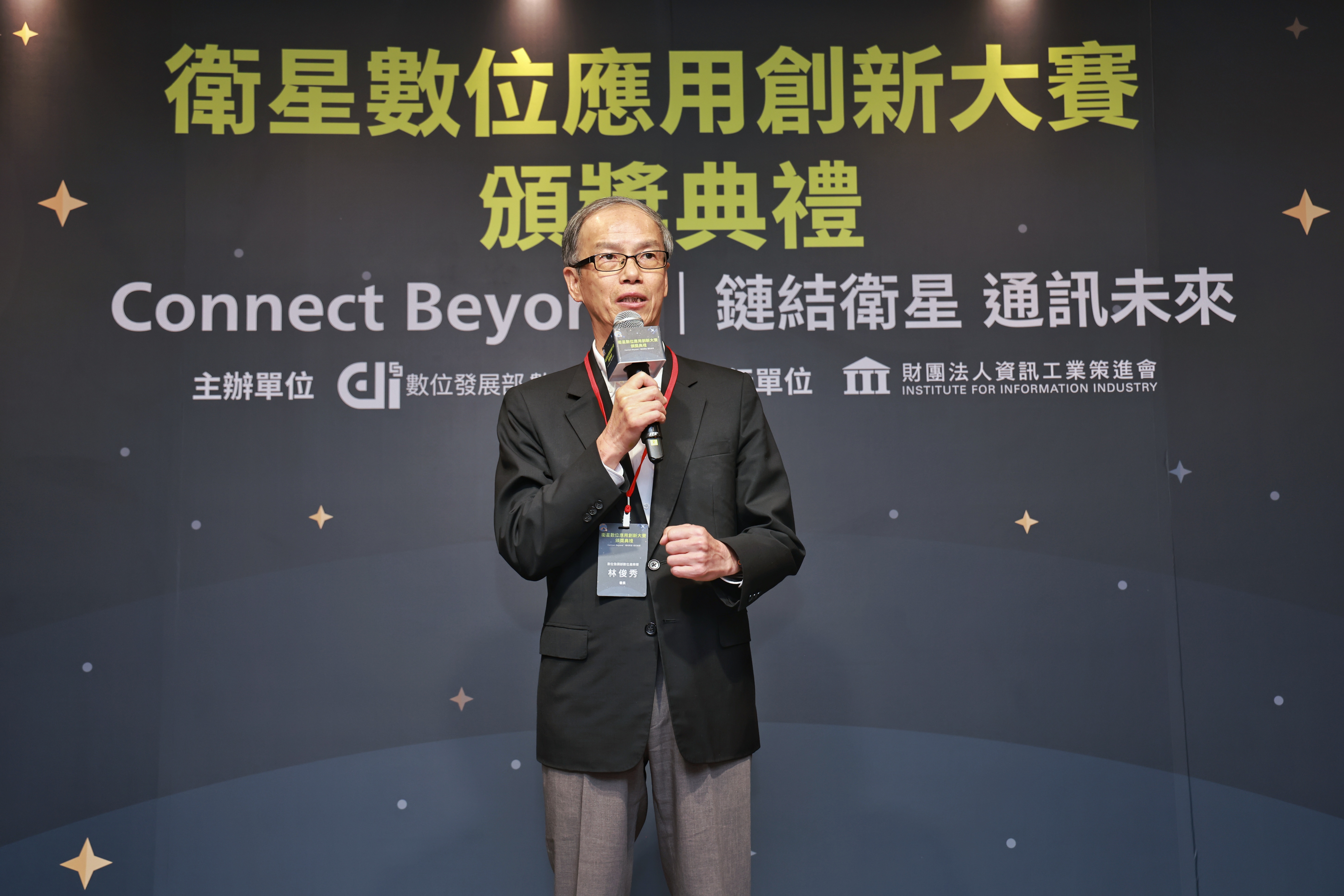
Jiunn-Shiow Lin, Director General of the Administration for Digital Industries (ADI), stated that this competition is more than just a creative arena; it is a mechanism centered on “driving innovation through industry needs.” The competition invited organizations such as Yang Ming Marine Transport, Pyras Technology, the Aquaculture Development Association, and the Overseas Fisheries Development Council to propose real-world industry pain points, enabling participating teams to develop solutions tailored to actual scenarios.
Director General Lin pointed out that this mechanism effectively facilitates matchmaking between participating teams, demand-side entities, and ICT service providers, accelerating the transition of research outcomes from Proof of Concept (PoC) to practical implementation. Among the 20 winning teams, 18 teams involved industry-academic collaboration, signaling a successful integration of information and communication technology (ICT) companies—such as Chunghwa Telecom, Taiwan Fixed Network, Askey Computer, and Wave-In Communication—with academic research capabilities.
Award Highlights: Building a “Digital Lifeline” for Disaster Recovery and Smart Maritime Protection
The winning entries span diverse fields including disaster prevention and response, smart fisheries, telemedicine, and cold-chain logistics. For instance, the “Dual-Mode Satellite/Mobile Communications” solution, a collaboration between Chunghwa Telecom and the Lienchiang County Fire Department, utilizes satellites as a backup communication mechanism during disasters. This ensures that rescue commands and information transmission remain functional even when terrestrial networks are disrupted, acting as a vital “digital lifeline” for uninterrupted emergency response.
Furthermore, several projects focused on high-seas fishery communications, smart cold-chain logistics, and maritime safety management. By leveraging low Earth orbit (LEO) satellites to bridge communication gaps on the high seas, these solutions enable real-time medical support, logistics monitoring, and safety management, demonstrating high potential for deployment.
Gathering Momentum to Build a Satellite Application Innovation Ecosystem
The competition successfully connected 16 colleges and universities, including National Taiwan University of Science and Technology, National Taipei University of Technology, National Central University, National Sun Yat-sen University, National Cheng Kung University, and National Taitung University, with 26 ICT companies to form a cross-domain cooperation network. These results echo the global shift from hardware manufacturing toward application services. They not only demonstrate the teams' capacity for technical integration but also highlight satellite services as a new 'blue ocean' for digital transformation.
Looking ahead, the ADI will continue to refine its competition and validation mechanisms, promoting a "three-in-one" model of "competition, validation, and industrial collaboration" alongside subsidy programs. This approach aims to drive outstanding solutions toward commercialization and link with international markets, gradually building a comprehensive satellite application service ecosystem in Taiwan.