MODA Hosts the 2026 Civic Tech Pilot Field to Initiate Cooperation, Private Sector and Local Governments Join Hands in Tech for Disaster Resilience
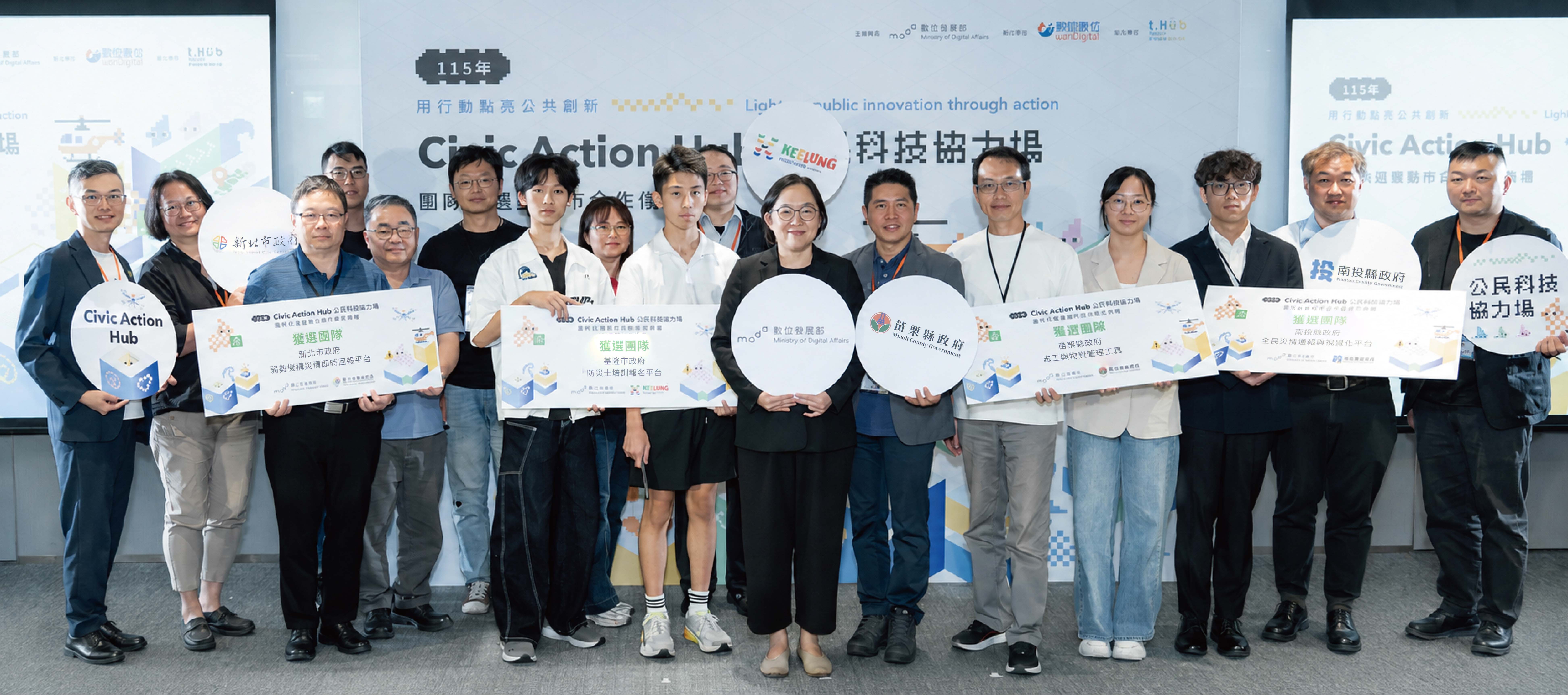
The Ministry of Digital Affairs (MODA) held the Final Team Selection & Local Government Partnership Ceremony yesterday (25th) for the 2026 Civic Tech Pilot Field. This year's event focuses on Tech for Disaster Resilience. A total of 29 teams passed the eligibility review and entered the selection phase. After a multi-stage selection process including proposal review, preliminary selection, and the final on-site selection, four teams, namely Hsu O-hao (許O豪), Preparedness Engineering Crew (有備無患工程隊), Ko O-fei (柯O飛) and RiEASE Technology (睿鍶科技), stood out. Utilizing the digital innovation capabilities of the private sector, they will work with local governments to create technology-based disaster prevention tools that meet the frontline needs.
MODA noted that the four selected teams will collaborate with local governments respectively—the Preparedness Engineering Crew will collaborate with the Keelung City Government on the Disaster-Prevention Specialist Training & Registration Platform; RiEASE Technology will engage in the New Taipei City Government's Real-Time Status Reporting for Care Facilities; Ko O-fei will develop the Volunteer & Relief-Supply Management Tool with the Miaoli County Government; and Hsu O-Hao will assist the Nantou County Government in developing the Public Disaster-Reporting & Visualization Platform. These projects transform civic tech innovation into validatable public services.
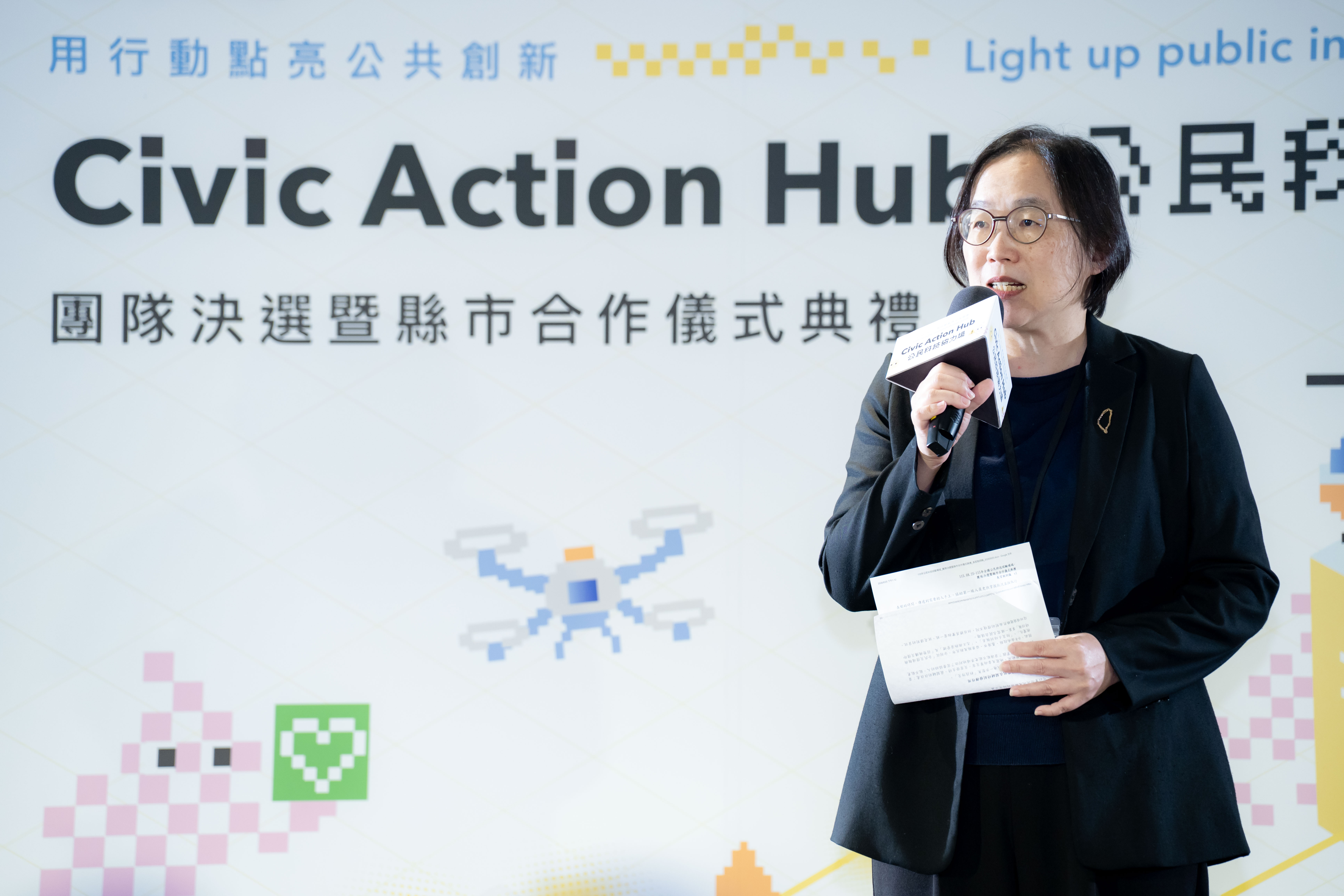
Deputy Minister of Digital Affairs Isabel Hou pointed out that MODA's role is to “bring people together,” that is, to establish mechanisms, inviting local governments and the private sector to pool resources to solve problems together. This year, issues concerning disaster prevention technology are closely related to domestic emergency resilience. The aim is to allow frontline government personnel, the technical community, and local residents to jointly delineate problems, seek solutions, and harness Taiwan's abundant citizen participation capabilities to create disaster prevention tools that can closely meet local needs. By doing so, an enhanced foundation for more efficient collaboration in responding to challenges can be established.
MODA explained that this year's event is centered on the spirit of Civic Action Hub and the annual theme of “Light up Public Innovation Through Action.” Via the collaboration of digital-transformation mentors and development teams, it promotes dialogue between the civic tech community, participants from different professional fields and front-line personnel of county and city governments, to jointly delineate disaster prevention needs and pain points, pursue design solutions, and validate real-world application scenarios.
At the ceremony, it was announced that the selected teams will start collaboration with the four county and city governments, officially entering the stage of requirement interviews, prototype planning, and field testing. MODA explained that the selected teams will begin clarifying requirements with the challenge agencies starting in September and complete the development of tool prototypes and user testing by the end of the year. They are expected to complete code transfer and results publication in the first quarter of 2027.
To maximize the benefits of innovative achievements, all development results will be made available to the public for review, contribution, and feedback on MODA's GitHub platform in accordance with the relevant provisions of the Standard for Public Code. Other county and city governments and private sector entities are also welcome to freely expand and utilize these results.
MODA emphasized that since its launch in 2023, the Civic Tech Pilot Field has successfully achieved several concrete results, such as the Early Intervention Interdisciplinary Assessment Clinic Online Reservation and Inquiry System and the Digital Dengue Fever Prevention Tool, proving that innovation in public services can arise from real needs and be created through public-private partnerships. In the future, MODA will continue to combine local needs with technological capabilities of the private sector to improve the quality of public services and create a more resilient and thoughtful digital society.