MODA Releases “NGO/NPO Data Transformation Handbook ”: Collaborating with Industry, Government, and the Public to Create AI-driven Public Services
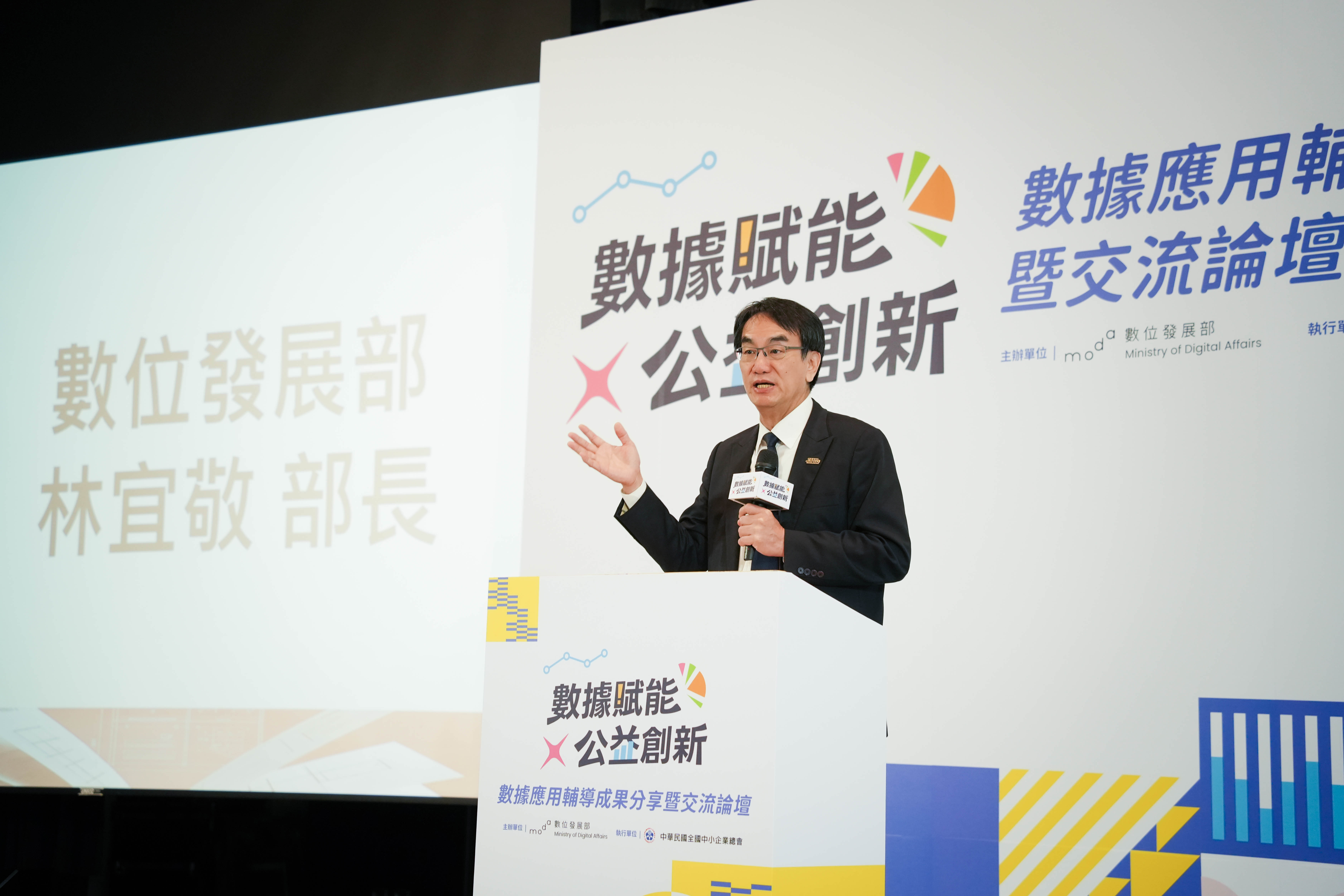
Today (9/22), the Ministry of Digital Affairs (MODA) held the “Data-Driven Empowerment for Social Innovation ” Results Sharing and Exchange Forum. The event brought together mentored non-profit and government organizations to share their practical outcomes following the implementation of AI and data analytics. During the forum, MODA officially launched the “NGO/NPO Data Transformation Handbook,” synthesizing three years of hands-on transformation support into actionable, replicable tools and methodologies as a practical resource for all sectors. The event also joined forces with industry partners, including Cisco International Taiwan, OenTech, and NETivism, to foster collaboration across demand, tech, and private-sector support sectors, aiming to collectively build a more resilient data ecosystem for public services.
MODA explained that although many NGOs/NPOs have frontline service experience, they often face challenges such as inconsistent data quality, insufficient data analysis capabilities, and barriers to the adoption of AI tools. For the past three years, MODA has promoted the “Data-Driven Empowerment for Social Innovation” initiative. Through an eight-month capacity-building program followed by tailored, hands-on mentoring, it meets NGOs and NPOs at their specific needs; it helps organizations inventory, clean, and leverage their existing data, transforming once-scattered information into actionable tools that streamline operations, optimize service delivery, and elevate decision-making.
MODA’s newly released “NGO/NPO Data Transformation Handbook” compiles methodologies, tools, case studies, and actionable takeaways from the years of mentoring. Designed for organizations of all sizes and stages of development, it serves as a roadmap, helping NGOs/NPOs chart a data transformation path suited to their unique needs.
Minister of Digital Affairs Lin Yi-jing stated that the true value of AI lies not just in tackling large-scale challenges, but in addressing the daily, practical needs of government agencies and NPOs, adding that government agencies and NPOs should proactively seek appropriate solutions based on the problems they face. He emphasized that data development requires joint engagement from NPOs, the private sector, and government agencies alike, rather than government promotion alone. He added that this forum is a concrete demonstration of cross-sector collaboration in advancing data applications. Minister Lin further pointed out that Taiwan is already at the forefront of global digitalization and data development, and that the key to the next stage is putting this accumulated data to work and create value.
MODA explained that this forum showcased several key outcomes in data and AI application, ranging from process optimization within NPOs to the adoption of AI across frontline government operations. The Nuan Nuan Sunshine Association showed how it used data to re-examine its fundraising strategy and successfully reversed the downward trend in regular fixed-amount fundraising, attracting more than 440 new donors. The Children's Hearing Foundation used data analysis to accurately understand the behavior of its supporters, resulting in a 51.3% increase in fundraising through LINE Pay and a 29.1% increase in the growth rate of donations through its official website. Starting with knowledge management, social innovation organization Impact Hub Taipei systematized experience previously scattered across personnel and documentation, turning it into a lasting organizational asset.
Government application cases also demonstrated that AI has moved beyond proof-of-concept into active workplace implementation. The Department of Education, Taipei City Government, collaborated with over 20 units to establish an educational data governance framework and built 16 indicator dashboards, converting complex administrative records into a foundation for educational governance and AI-driven decision support. The Kaohsiung City Police Department developed a traffic-regulation AI application for police use and validated it across 17 police precincts. The solution streamlines legal searches for frontline officers, cutting regulatory lookup times by more than 50%. The Taitung County Fire Department implemented an end-to-end automated disaster response report generation system, cutting the preparation time for typhoon and flood reports from 40–60 minutes of manual work down to just 2 minutes, boosting information processing efficiency during emergency responses.
Moving forward, MODA stated, it will continue to build platforms for cross-sector exchange and collaboration, bridging public service needs, technical expertise, and private-sector support. By meeting organizations at their real-world needs, MODA aims to help more entities adopt data and AI solutions, ensuring that data applications remain a vital driver for advancing public service innovation, enhancing governance efficiency, and amplifying social impact across Taiwan